
Cardano Catalyst is quietly reshaping how enterprises build on blockchain, and Salesforce is the perfect stage for it. We at Web3 Enabler have watched this intersection grow from theoretical to genuinely useful, building the Ada Wallet for Salesforce in Fund 14.
The funding flowing through Cardano Catalyst is backing real projects that integrate seamlessly with enterprise platforms. If your organization is curious about bringing blockchain into your existing workflows, this is the moment to pay attention.
How Cardano Catalyst Funds Real Blockchain Work
The Money Actually Moves
Cardano Catalyst fund cycles distribute real capital into projects with measurable milestones. The voting mechanism matters here too-real community scrutiny shapes what gets funded. Proposals that spell out clear deliverables, realistic timelines, and measurable impact stand out. Vague promises about ecosystem growth don’t survive this process.
Categories That Match Enterprise Needs
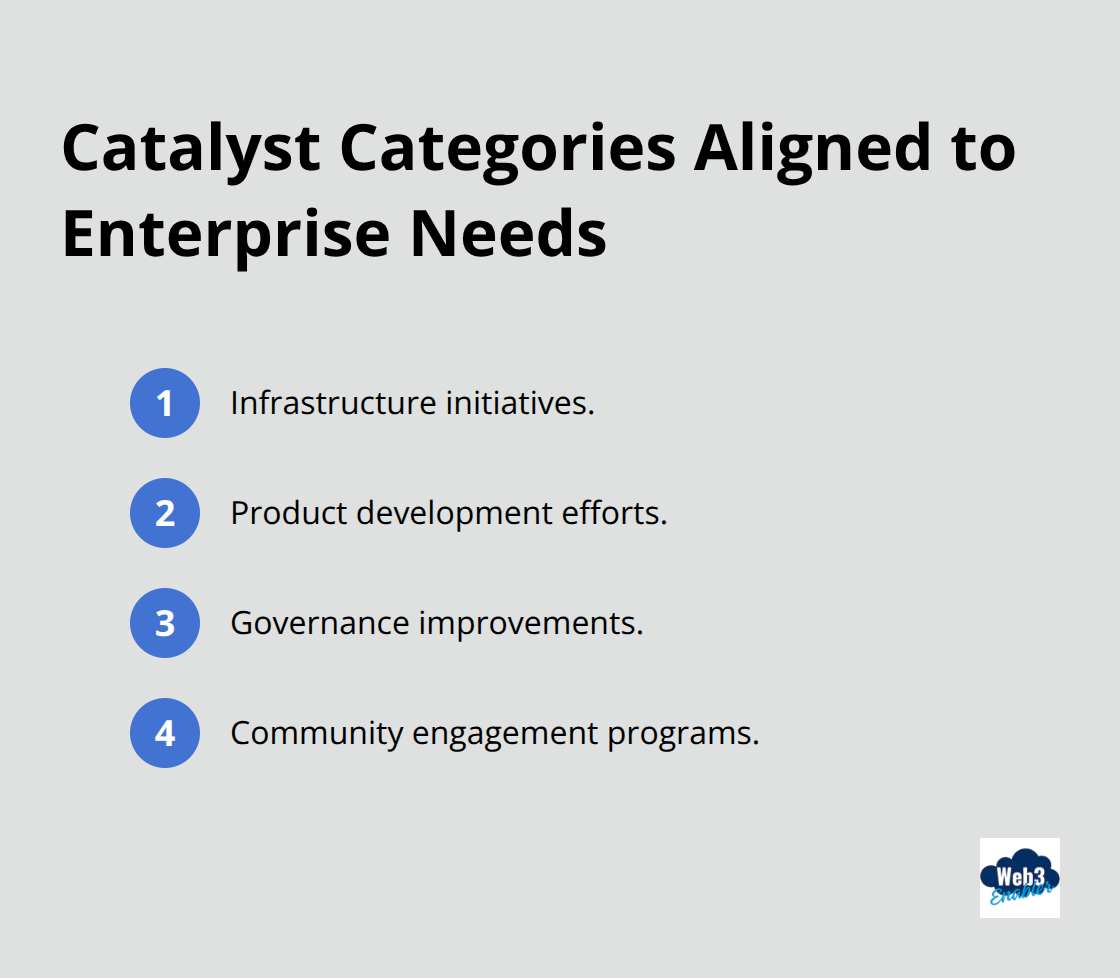
Catalyst funds projects across distinct categories, reflecting a deliberate push toward diversity rather than betting everything on DeFi hype. The categories range from infrastructure and product development to governance improvements and community engagement. For Salesforce-focused builders, this means Catalyst actively backs proposals that strengthen the ecosystem’s technical foundation and usability-exactly the kind of work that makes enterprise adoption possible.
A proposal that shows how to integrate Cardano data into Salesforce workflows, automate grant distributions through smart contract logic, or build tokenized loyalty programs within the CRM has clear runway here. The funding structure rewards specificity. Projects that articulate exact milestones, resource requirements, and success metrics get taken seriously. A proposal requesting 50,000 ADA with three clear phases and monthly delivery targets performs better than one asking for 500,000 ADA to build vaguely toward blockchain synergy.
What Actually Wins Funding
The projects that move fastest are those with defined user problems, not technology solutions chasing problems. Catalyst’s track record shows that real money flows to real work, and that work is increasingly focused on making blockchain useful inside existing business systems rather than replacing them. Organizations that propose Salesforce integrations (especially those addressing payment processing, compliance, or automation) align perfectly with what Catalyst’s community votes to support.
The specificity requirement filters out noise. Reviewers want to see exactly who benefits, what problem you solve, and how you measure success. A proposal that connects Cardano stablecoin payments to Salesforce order management, for instance, speaks directly to enterprise pain points and demonstrates clear ROI. That’s the kind of work Catalyst funds at scale.
Why Salesforce Became the Enterprise Blockchain Platform
Salesforce holds roughly one-third of global CRM users, and that installed base matters enormously for blockchain adoption. The platform already manages customer data, transactions, and workflows for millions of organizations. Adding blockchain capabilities to Salesforce doesn’t require ripping out existing systems or retraining entire teams-it means extending what already works. Salesforce’s architecture supports secure API connections to external systems, which makes linking to Cardano wallets, token transfers, and on-chain verification straightforward.
Organizations validate customer identity through blockchain proofs, automate payment settlements in stablecoins, and track tokenized assets directly within their CRM workflows without abandoning their current tech stack. The platform’s flexibility means a financial services firm can integrate Cardano stablecoin payments into order management in weeks, not months. A loyalty program can mint rewards as native Cardano tokens and reconcile them instantly in Salesforce customer records. This is not theoretical-companies already running Salesforce move blockchain from a future project into production infrastructure because the plumbing exists.
The global CRM market reached $58.82 billion in 2022 and is projected to grow at a compound annual rate of 13.9% through 2030. That scale means even niche blockchain use cases find immediate market traction. Salesforce integration solutions capture roughly one-third of that market, making the platform the obvious choice for enterprises wanting blockchain capabilities without operational disruption.
Payment Processing and Compliance Move Faster
Payment processing on Salesforce now connects directly to Cardano stablecoins, cutting settlement times from days to minutes and reducing intermediary fees. Compliance teams use on-chain attestations stored in Salesforce to prove customer verification without repeatedly collecting the same documentation. Loyalty programs tokenize rewards as Cardano-native assets, letting customers see real ownership and trade or transfer points if they choose. These are not beta projects or proof-of-concept exercises-organizations have moved past the hype phase and into measurable operational improvements.
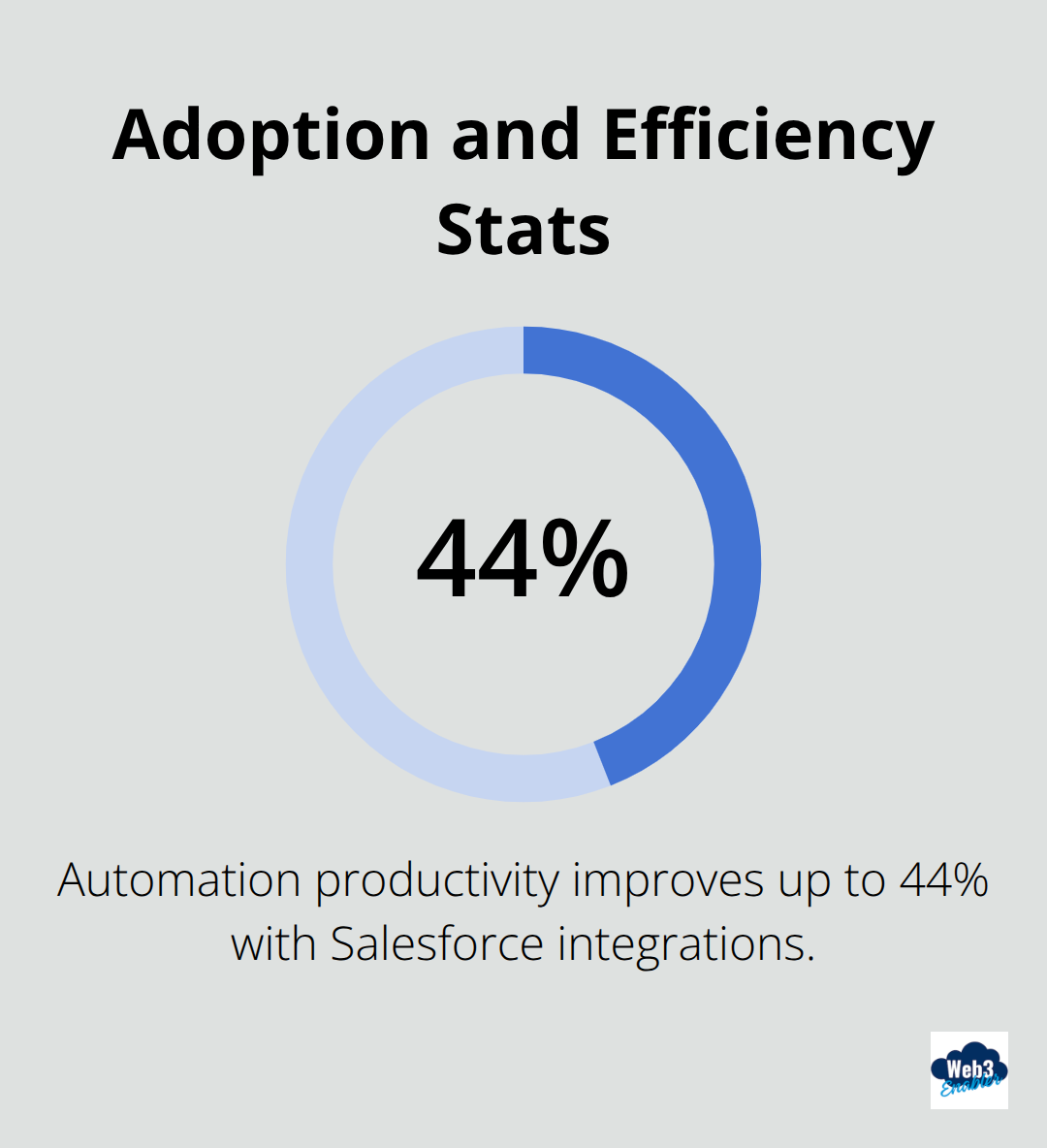
Automation productivity improves up to 44% when Salesforce integrations reduce manual data entry, according to research from Appinventiv. That translates directly to cost savings and faster processing cycles. A Cardano Catalyst-funded proposal that demonstrates similar metrics for blockchain-integrated workflows has already won community approval and funding. The specificity matters. A team that shows exactly how tokenized settlement reduces reconciliation time by two days and saves $15,000 monthly gets funded. One that vaguely promises ecosystem growth does not.
Integration Patterns Eliminate Custom Coding
Integration patterns like batch data synchronization and remote process invocation let Salesforce communicate with Cardano nodes without custom coding. Standard connectors and middleware tools handle the heavy lifting, meaning smaller teams build meaningful blockchain workflows. Web3 Enabler provides 100% Salesforce native blockchain solutions available on the Salesforce AppExchange, supporting exactly this kind of integration. Organizations move from exploration to implementation faster because the platform components already exist and integrate seamlessly with Salesforce’s native architecture.
Metrics Define Real Success
Organizations need concrete metrics before committing resources. Adoption of Cardano-enabled features in Salesforce should track alongside proposal funding activity and time-to-value from initial proposal to working MVP. If a team proposes a blockchain-integrated customer verification workflow, they should measure login success rates, manual review reductions, and cost per verified customer before and after implementation.
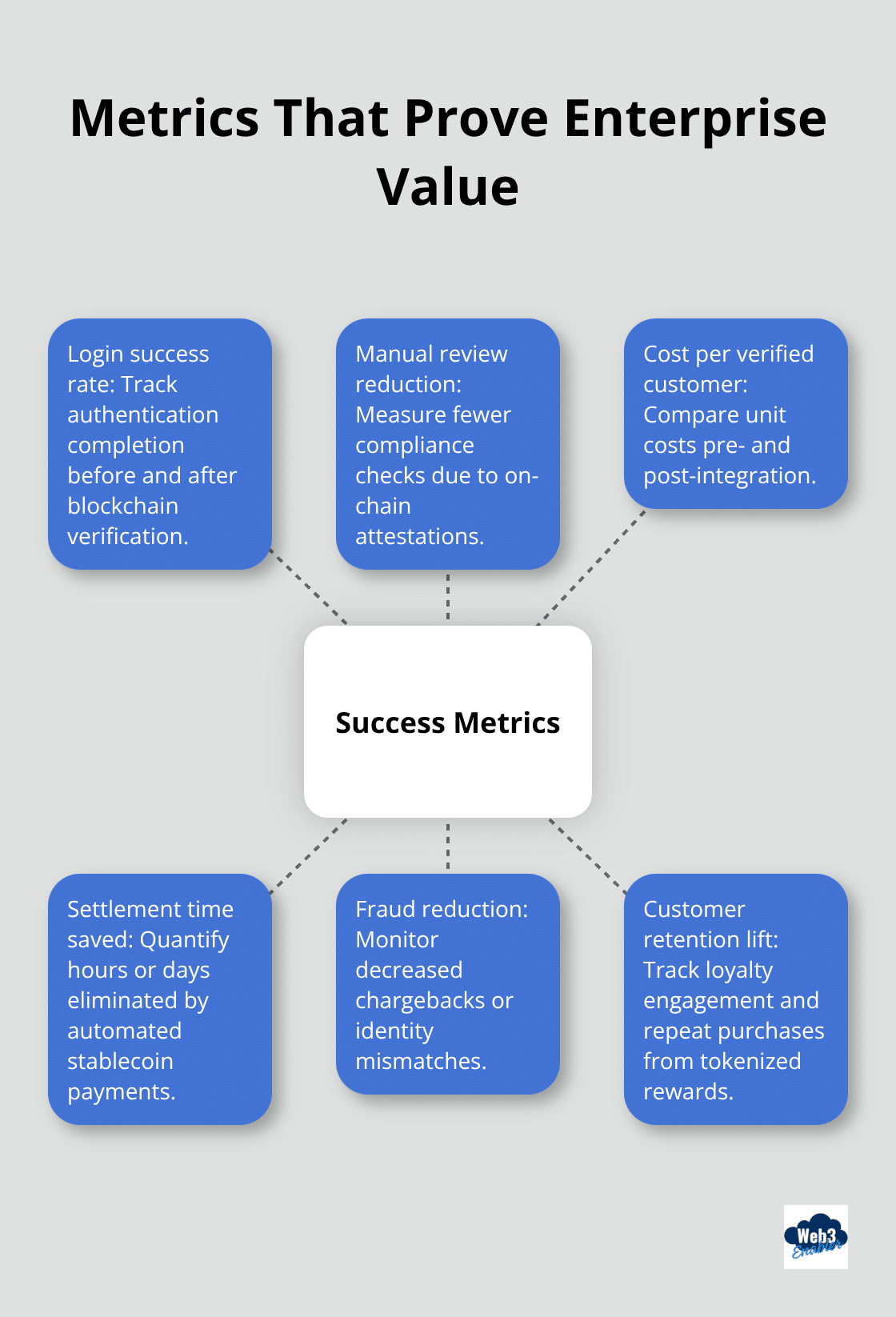
ROI becomes quantifiable when you track fraud reduction from on-chain proofs, time saved from automated settlements, and customer retention improvements from tokenized loyalty programs. A financial advisor managing client crypto holdings within Salesforce can report exactly how many hours per week visibility into those holdings saves on manual portfolio reviews. That number justifies the integration investment immediately.
Token economics matter too. A loyalty program using Cardano tokens needs thoughtful distribution mechanisms and redemption options, not just speculation mechanics. If customers earn tokens through purchases and can redeem them for discounts, referral bonuses, or partner benefits, the program drives measurable business outcomes. The Catalyst community funds proposals that show this kind of economic design upfront. Vague tokenomics get rejected.
Planning the Investment Correctly
Integration projects commonly range from $25,000 to $250,000 plus ongoing maintenance according to typical Salesforce implementation costs. That investment makes sense only when success metrics are defined before development starts. Organizations should map data requirements, understand which Cardano assets matter for their workflows, and plan for data cleanup before selecting integration tools. The work upfront prevents costly rework later.
This foundation of clear metrics and realistic planning separates proposals that Catalyst funds from those that languish in the voting queue. Organizations ready to build on this infrastructure need to understand what resources they’ll access and how the Cardano ecosystem supports their teams.
Building Support Networks for Cardano Catalyst Proposals
Challenge Statements Point Builders Toward Funded Work
The Cardano Catalyst ecosystem rewards specificity, and that means developers need real resources to turn ideas into funded proposals. Cardano Catalyst funding rounds challenge statements engage the community to develop the Cardano ecosystem through a series of innovation funds. A developer reviewing these challenges can immediately identify gaps where Salesforce integration solves a concrete problem. If Catalyst lists a challenge around improving grant distribution efficiency or automating compliance reporting, a team building that solution on Salesforce has already won half the battle.
The community knows what it needs, and builders who address those stated priorities move from proposal to funding faster than those guessing at problems. Access to technical documentation from IOHK and IOG Academy removes the guesswork around Cardano architecture, node setup, and smart contract patterns. Developers don’t waste months learning theory when they can reference proven implementation guides and join community calls where architects discuss real challenges.
Integration Tools Reduce Development Overhead
Teams building Catalyst proposals can integrate directly with existing Salesforce infrastructure without custom development overhead. The AppExchange catalog itself serves as a resource network, showing what integrations already exist and where gaps remain for new proposals to address. Organizations looking for Salesforce native blockchain solutions find options available on the AppExchange that support payments, compliance, and automation workflows.
Town Halls Reveal What Voters Actually Care About
Town Hall sessions hosted by Catalyst run regularly and attract builders, voters, and community reviewers who openly discuss proposal feedback before submissions close. Attending these calls before writing your proposal matters enormously if you want funding. Teams hear directly what voters care about, what metrics matter, and which categories have oversaturated proposals versus genuine opportunity.
A developer who sits through two Town Halls before writing their proposal learns more about community priorities than months of reading documentation. Cardano’s ecosystem has created a proven track record of what works and what stalls across multiple funding cycles. That completion rate signals a mature ecosystem where support systems keep projects moving.
Community Reviewers Catch Flawed Proposals Early
Community reviewers provide structured feedback before the voting phase, catching unclear milestones or unrealistic timelines before they reach voters. For Salesforce builders, this means feedback often identifies whether integration scope is realistic, whether data architecture makes sense, or whether success metrics are measurable. That input costs nothing and prevents wasting months on a proposal design that voters would reject.
Organizations ready to build should review completed proposals in their category on Cardano.org, identify which ones addressed similar problems, and understand exactly why those projects succeeded or struggled. That competitive analysis takes hours but determines whether your proposal gets funded or ignored.
Final Thoughts
Cardano Catalyst and Salesforce have converged at exactly the right moment, and organizations no longer need to choose between their existing enterprise infrastructure and blockchain capabilities. The funding flowing through Catalyst backs real projects that integrate seamlessly into Salesforce workflows, transforming blockchain from a speculative experiment into operational infrastructure that solves measurable business problems. Teams building Cardano Catalyst Salesforce solutions now have access to proven integration patterns, technical documentation, and a funding mechanism that rewards specificity over hype.
Organizations ready to move forward should start by reviewing completed proposals in their category on Cardano.org and identifying which projects addressed similar problems. Map your data requirements before selecting integration tools, define success metrics before development starts, and attend a Town Hall to hear community priorities directly. Then write a proposal that addresses a stated challenge with clear milestones, realistic timelines, and measurable impact.
The funding is real, the community is engaged, and the technical infrastructure exists. Web3 Enabler provides Salesforce native blockchain solutions available on the Salesforce AppExchange, supporting exactly this kind of integration through payments, compliance, and automation workflows.