


Your Salesforce payments stack is built for speed, but traditional systems keep you waiting. Blockchain changes that equation-faster settlements, lower costs, real security.
We at Web3 Enabler have seen enterprises waste months on complex integrations. AppExchange tools integration removes that friction, connecting blockchain directly to what you already use.
Why Your Payment Stack Is Stuck in the Slow Lane
The Settlement Speed Problem Nobody Talks About
Card settlements in North America still take T+1 to T+3 days, even though we’ve had the internet for thirty years. Your Salesforce payments system processes orders instantly, but the money doesn’t actually move for days. This lag forces you to pre-fund accounts, reconcile batches manually, and watch cash flow get stuck in limbo. Global digital payments reached £18.6 trillion in 2025, yet the underlying settlement infrastructure hasn’t fundamentally changed since the early 2000s.
Cross-Border Payments: Where Traditional Systems Fail
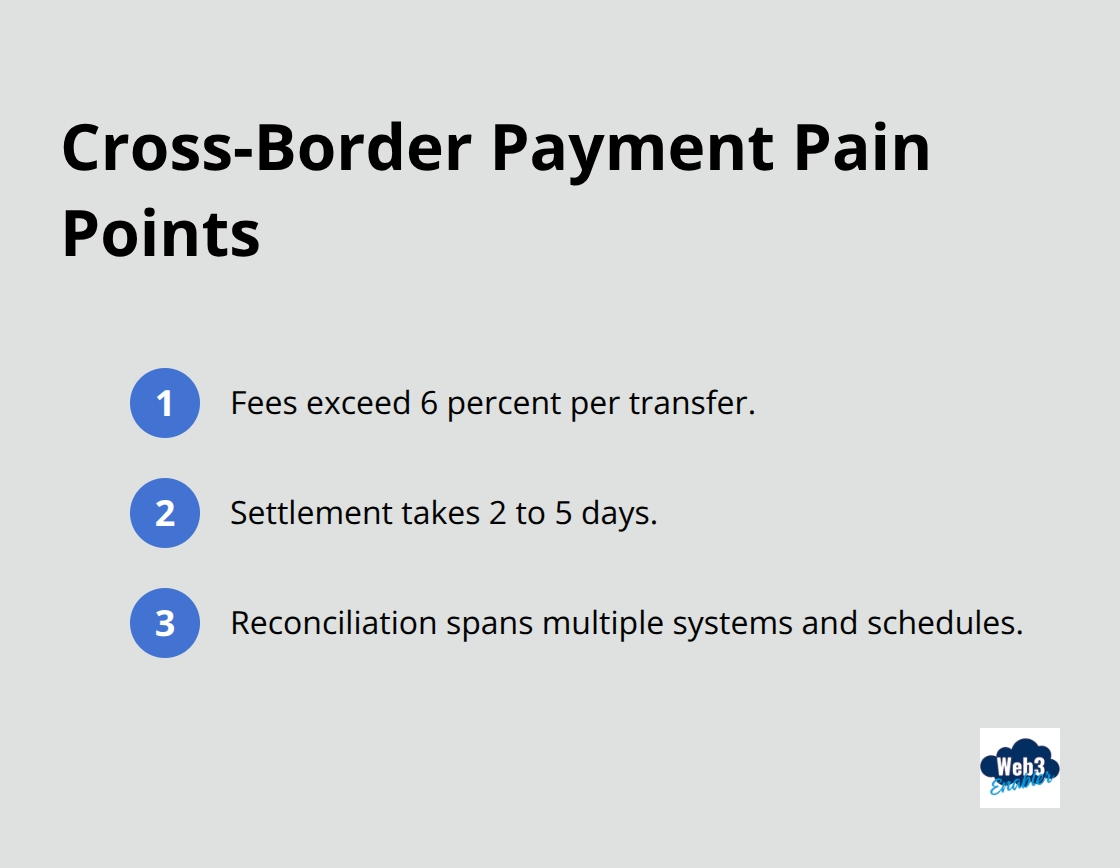
International wire transfers cost above 6 percent and take 2 to 5 days, making it nearly impossible to serve global customers without friction. Reconciliation becomes a nightmare when transactions settle across multiple systems on different schedules. You end up with spreadsheets, manual matching, and revenue leakage hiding in the gaps between your payment processor and your ERP or accounting system.
How Blockchain Settlement Changes the Game
Blockchain settlement operates around the clock with finality in under 5 minutes on public networks or under an hour on enterprise systems. Stablecoins-digital currencies pegged to the dollar-now represent over 300 billion dollars in market cap and handle more than 60 percent of their volume through payments, settlement, and treasury movement rather than trading. Enterprise adoption of stablecoins grew roughly 146 percent into 2026, and for good reason: Visa runs stablecoin settlement pilots that scale to billions in annualized volume.
Your merchants get faster funding, your treasury team gets real-time visibility across entities, and your reconciliation process becomes a single shared ledger with persistent transaction IDs and timestamped records. This isn’t speculation-it’s infrastructure. Companies like IBM and Maersk use blockchain for supply chain transparency and settlement. JPMorgan runs Onyx for real-time interbank corporate payments.
The Two-Layer Model: Keep Your Front-End, Upgrade Your Back-End
You don’t need to accept crypto from customers or disrupt your card experience at checkout. A two-layer model works perfectly: your front-end stays card-based for customer experience, while the back-end settlement layer moves to blockchain for speed, cost, and auditability. Blockchain sits behind the scenes, not in front of your customers-your payment experience stays familiar while your settlement infrastructure gets faster and cheaper.
This separation of concerns means you gain all the benefits of blockchain settlement (real-time finality, lower costs, transparent reconciliation) without asking your customers to change how they pay. Your Salesforce stack connects to this blockchain settlement layer through native AppExchange tools, automating the entire flow from order to final settlement.
How Salesforce Native Blockchain Tools Actually Work
Why Native Integration Matters More Than You Think
Native Salesforce blockchain integration connects your payment stack directly within the platform you already use every day, without bolting on third-party middleware that creates more problems than it solves. Salesforce AppExchange hosts about 2,000 ISV partnerships, and the payments category has become increasingly critical as enterprises demand faster settlement and lower friction. Web3 Enabler built its solution as 100% Salesforce native, which means blockchain connectivity sits inside Sales Cloud, Financial Services Cloud, and Commerce Cloud rather than living in some external system you have to sync constantly. This matters because every integration point you eliminate reduces data sprawl, cuts reconciliation errors, and shrinks your operational overhead.
Real-Time Data Without the Sync Headaches
Salesforce Connect enables data virtualization with External Objects, allowing you to view live blockchain ledger data and report on settlement status without copying data into separate systems. The architecture supports real-time Pub/Sub APIs for payment status updates, meaning when a stablecoin transfer settles on-chain, your Salesforce records refresh instantly without manual intervention. Gartner research shows that over 60 percent of enterprise integration plans will use event-driven patterns by 2026 to scale AI and automation, and blockchain settlement fits naturally into this model because every transaction generates a timestamped event that triggers downstream workflows.
The Three-Part Architecture That Actually Works
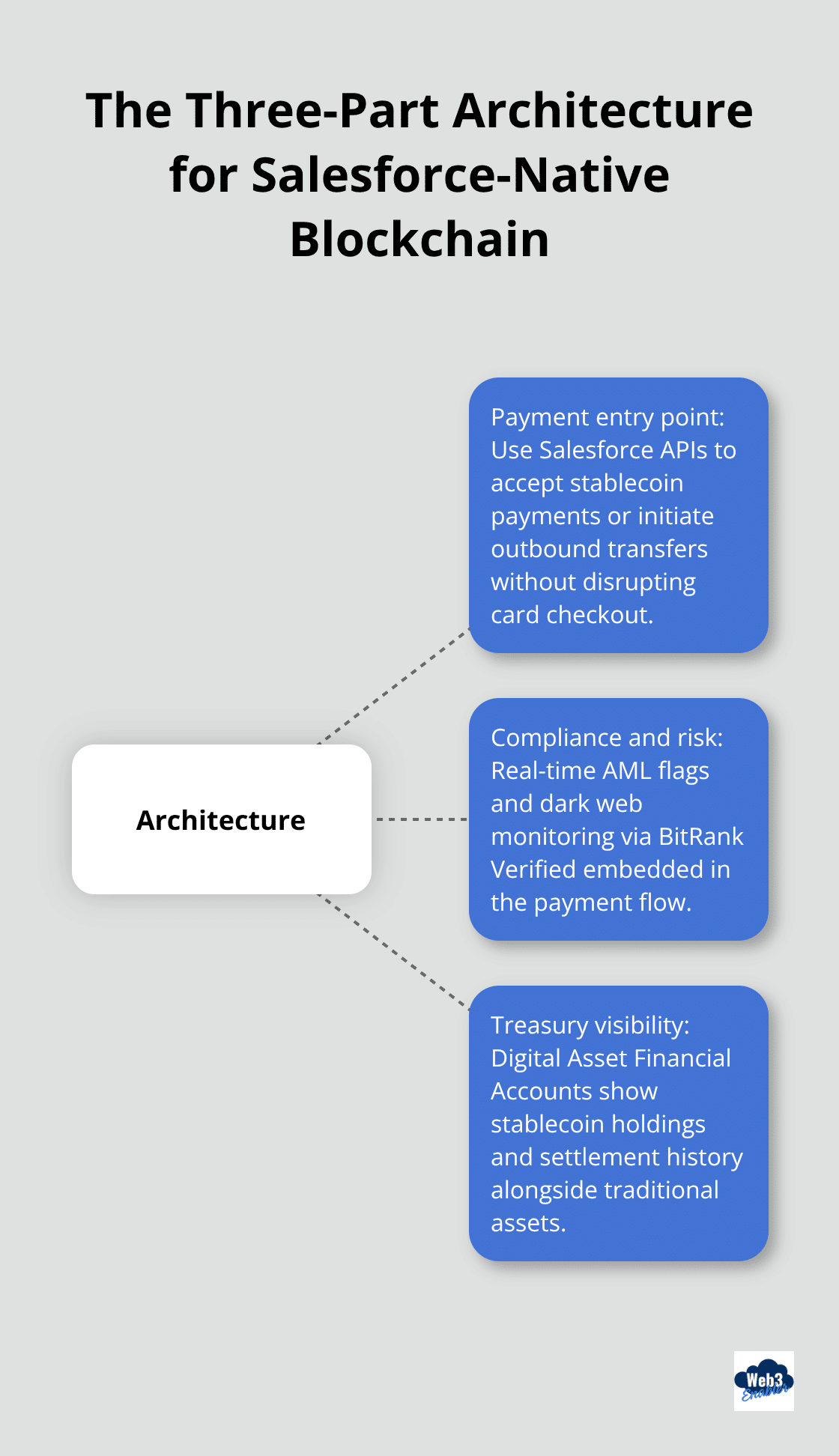
The practical setup requires three core components working together. First, your payment entry point connects through Salesforce APIs to accept stablecoin payments or initiate outbound transfers without disrupting your existing card-based checkout flow. Second, compliance and risk scoring happen in real-time using tools like BitRank Verified, which deliver AML flags and dark web monitoring directly within your payment flow, keeping regulatory requirements automated rather than manual. Third, your treasury and accounting teams gain visibility through Digital Asset Financial Accounts in Financial Services Cloud, showing stablecoin holdings and settlement history alongside traditional assets.
The Cost Advantage Compounds at Scale
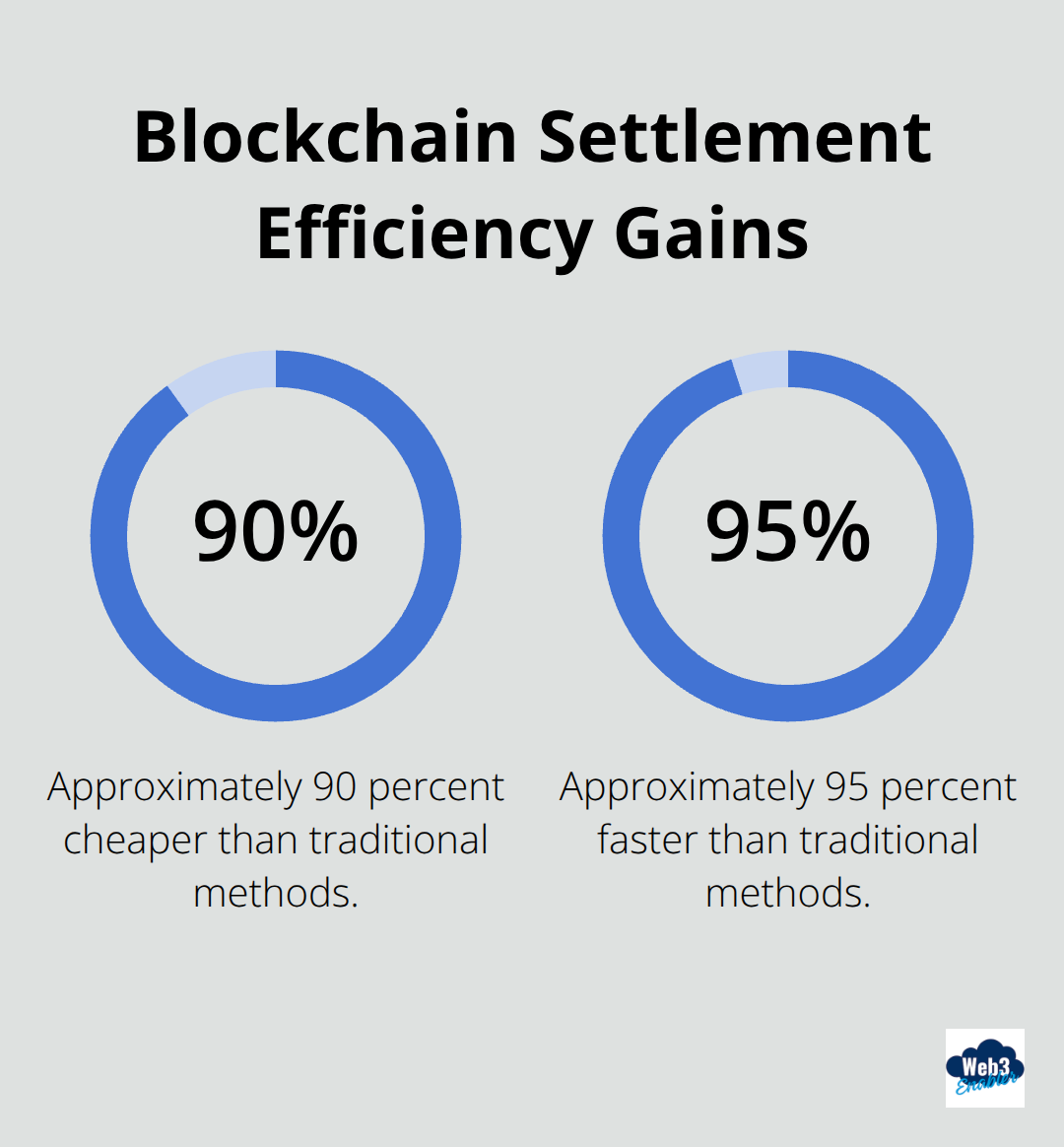
Enterprise blockchain payments run approximately 90 percent cheaper and 95 percent faster than traditional methods, and when you handle $4.4 trillion in annual B2B cross-border payments globally, even small efficiency gains compound into meaningful savings. Your reconciliation process collapses from days of batch matching into a single shared ledger with persistent transaction IDs, which means your finance team stops playing detective and starts focusing on strategy.
Partners like Ripple for XRP-based payments and Circle for USDC on-ramp and off-ramp capabilities mean your teams move between fiat and stablecoins without leaving Salesforce.
What Happens When You Connect the Pieces
Once these components work together, your payment operations transform from a fragmented mess into a coordinated system. Settlement happens faster, compliance runs automatically, and your treasury team sees everything in one place. The next step involves understanding which specific tools and features matter most for your payment processing needs.
Getting Stablecoin Payments Live Without Breaking Your Stack
Your Salesforce Stack Already Handles the Hard Part
Stablecoin payments sound complicated until you realize your Salesforce stack already processes the hard part-customer data, order management, reconciliation workflows. The integration layer is what changes. When you connect blockchain settlement to your existing Salesforce infrastructure, new transactions flow through your normal payment processing, but settlement happens on-chain instead of waiting in a bank’s queue. Fintech platforms integrating stablecoin rails saw payment volumes surge more than 150 percent in 2025, which tells you enterprises figured this out and moved fast.
Start With Outbound Payments First
Most enterprises start with outbound payments-paying contractors in USDC or sending cross-border supplier settlements faster than wire transfers allow. This approach requires zero customer education and delivers immediate cost savings. A contractor in Southeast Asia receives payment in stablecoins within minutes instead of waiting for an international wire, which means faster cash flow for them and lower banking fees for you. Your accounting system records the transaction with a persistent transaction ID and timestamp, eliminating the reconciliation nightmare that plagues traditional cross-border payments.
Inbound Acceptance Works Through the Two-Layer Model
If you want inbound stablecoin acceptance, the two-layer model works perfectly: customers still check out with cards or their preferred method, but your payment processor converts that transaction to stablecoins on the back end for settlement. This keeps friction off your customers while your treasury team gains instant, auditable settlement records in Salesforce. Your customers experience no change, yet your operations transform.
Build Your Compliance and Settlement Stack Strategically
The practical first step involves choosing your compliance and settlement partners carefully. Real-time AML and risk scoring (through tools like BitRank Verified) means compliance happens automatically within your payment flow rather than as a separate manual process. Stablecoin liquidity providers let you move between fiat and stablecoins without leaving your payment stack, and settlement infrastructure ensures transactions finalize quickly. You need all three working together-compliance automation prevents regulatory headaches, stablecoin liquidity keeps conversions seamless, and settlement infrastructure ensures transactions finalize quickly.
Pilot Your Highest-Friction Payment Corridor
Start with your highest-friction payment corridor: if you have suppliers in multiple countries, pick the two with the worst wire transfer experience and pilot stablecoin payments there first. You’ll see settlement time drop from days to minutes and costs fall compared to traditional methods. Your finance team gains real-time visibility into settlement status through Digital Asset Financial Accounts in Financial Services Cloud, which means no more guessing whether a payment landed. Once that pilot proves the model, expand to other corridors and eventually consider inbound acceptance. The entire setup integrates natively into Salesforce, so your team works inside the platform they already know rather than learning new systems. This is why enterprises like JPMorgan use blockchain rails for corporate payments and why Visa runs settlement pilots that scale to billions annually. The infrastructure works.
Final Thoughts
Blockchain integration into your Salesforce payments stack isn’t theoretical anymore. JPMorgan runs real-time corporate payments on blockchain. Visa scales stablecoin settlement to billions annually. IBM and Maersk use distributed ledgers for supply chain transparency. These aren’t experiments-they’re production systems that handle serious transaction volume and prove the model works at enterprise scale.
The practical reality is simpler than most enterprises expect. You don’t need to rebuild your payment infrastructure or ask customers to learn crypto. A two-layer model keeps your front-end familiar while your back-end settlement moves to blockchain for speed, cost, and auditability. Settlement happens in minutes instead of days, reconciliation collapses from manual batch matching into a single shared ledger with persistent transaction IDs, and cross-border payments that cost 6 percent and take five days now settle faster and cheaper through stablecoins.
AppExchange tools integration makes this happen without complexity. Native Salesforce blockchain solutions connect directly to Sales Cloud, Financial Services Cloud, and Commerce Cloud, eliminating the middleware sprawl that creates more problems than it solves. Real-time compliance automation through tools like BitRank Verified keeps regulatory requirements from becoming manual headaches, your treasury team gains instant visibility into settlement status through Digital Asset Financial Accounts, and your finance team stops playing detective and starts focusing on strategy. Start with your highest-friction payment corridor-the one where wire transfers cost the most and take the longest-and explore how AppExchange tools integration transforms your settlement operations.