


 Enterprise leaders investing in blockchain technology need concrete proof of value. Blockchain ROI measurement requires tracking specific metrics across cost reduction, revenue generation, and operational efficiency.
We at Web3 Enabler have analyzed hundreds of Salesforce blockchain integrations to identify the most impactful financial indicators. The data reveals measurable returns that justify implementation costs and drive strategic decision-making.
Which Metrics Actually Matter for Blockchain ROI
Successful blockchain integration in Salesforce demands tracking three primary financial indicators that directly impact your bottom line. Payment processing cost reduction represents the most immediate measurable benefit, with blockchain transactions eliminating intermediaries and reducing transaction times for cross-border payments. Companies that switch from bank-to-bank transfers to peer-to-peer stablecoin payments see significant cost reductions, which creates substantial savings on international payments and contractor compensation.

Process Automation Cost Savings
Smart contract automation eliminates manual verification steps that typically consume significant portions of operational budgets in finance departments. Documentation processing time drops from hours to minutes when blockchain handles contract execution automatically. Administrative overhead for cross-border transactions decreases substantially as intermediary banks become unnecessary. Staff previously dedicated to payment reconciliation can redirect efforts toward revenue-generating activities (this multiplies the cost reduction impact beyond simple fee savings).
Revenue Model Expansion Opportunities
Blockchain integration opens new revenue streams through digital asset management services and cryptocurrency payment acceptance. The cryptocurrency market continues to grow, presenting significant client acquisition opportunities for financial services firms. Companies that offer blockchain payment options report higher client retention rates compared to traditional-only providers. International market expansion becomes financially viable when transaction costs drop significantly (this enables profitable small-value transactions previously impossible with conventional banking).
Operational Speed Improvements
Transaction settlement time reduction from 3-5 business days to seconds creates measurable cash flow improvements. Working capital requirements decrease when payments clear instantly rather than sit in processing limbo for days. Client satisfaction scores improve when international payments arrive within minutes instead of weeks, which directly correlates with contract renewal rates. Real-time transaction visibility eliminates the administrative burden of payment tracking and frees up resources for strategic initiatives rather than operational firefighting.
These quantifiable metrics help demonstrate ROI and provide the foundation for calculating your specific financial impact, but accurate measurement requires proper comparison frameworks and baseline establishment (which we’ll explore in the next section).
How Much Money Does Blockchain Integration Actually Save
Traditional payment systems drain corporate budgets through excessive fees that blockchain technology eliminates with measurable precision. SWIFT bank-to-bank transfers require significant costs per transaction, while peer-to-peer stablecoin payments reduce costs to 0.5% of transaction value. Companies that process $1 million monthly in international payments save approximately $240,000 annually when they switch to blockchain solutions. Cross-border transaction costs drop from 3-7% to under 1% with blockchain implementation, which creates immediate bottom-line impact for businesses that handle significant international volumes.
International Transfer Cost Reductions
International wire transfers through traditional networks require 3-5 business days and charge $15-50 per transaction plus currency conversion spreads of 2-4%. Blockchain payments settle within seconds at fixed costs under $1 regardless of transaction size. A company that pays 100 international contractors monthly saves $4,800 annually on transfer fees alone (this excludes the substantial currency conversion savings). The cryptocurrency market worth $2.5 trillion grows at 12.5% annually, which indicates increased acceptance and infrastructure maturity that reduces implementation risks.

Administrative Time Savings
Payment reconciliation consumes 2-4 hours weekly for finance teams that handle traditional international transfers, while blockchain transactions provide instant settlement confirmation and automatic record maintenance. Administrative staff costs decrease by $15,000-25,000 annually when blockchain automation replaces manual payment processes. Real-time transaction visibility eliminates dispute resolution time that typically requires 10-15 business days for international payments.
Working Capital Improvements
Instant settlement creates additional financial benefits as companies access funds immediately rather than wait for traditional clearing periods that tie up operational cash flow. Finance teams redirect efforts from payment tracking toward revenue-generating activities when blockchain handles transaction verification automatically. Cash flow predictability improves dramatically when settlement times drop from days to seconds (this enables better financial planning and resource allocation).
These concrete savings establish the foundation for comprehensive ROI calculations, but enterprise leaders need specific examples of how other companies achieved these results in practice.
What Results Do Companies Actually See
Enterprise blockchain adoption produces measurable financial outcomes that demonstrate clear return on investment across multiple operational areas. Companies implementing blockchain verification systems report significant reductions in customer service inquiries and support costs, leading to faster resolution times. Organizations that process international payments report substantial savings when they switch from traditional banking to blockchain solutions, with transaction costs dropping significantly compared to conventional transfer methods.
Payment System Transformation Results
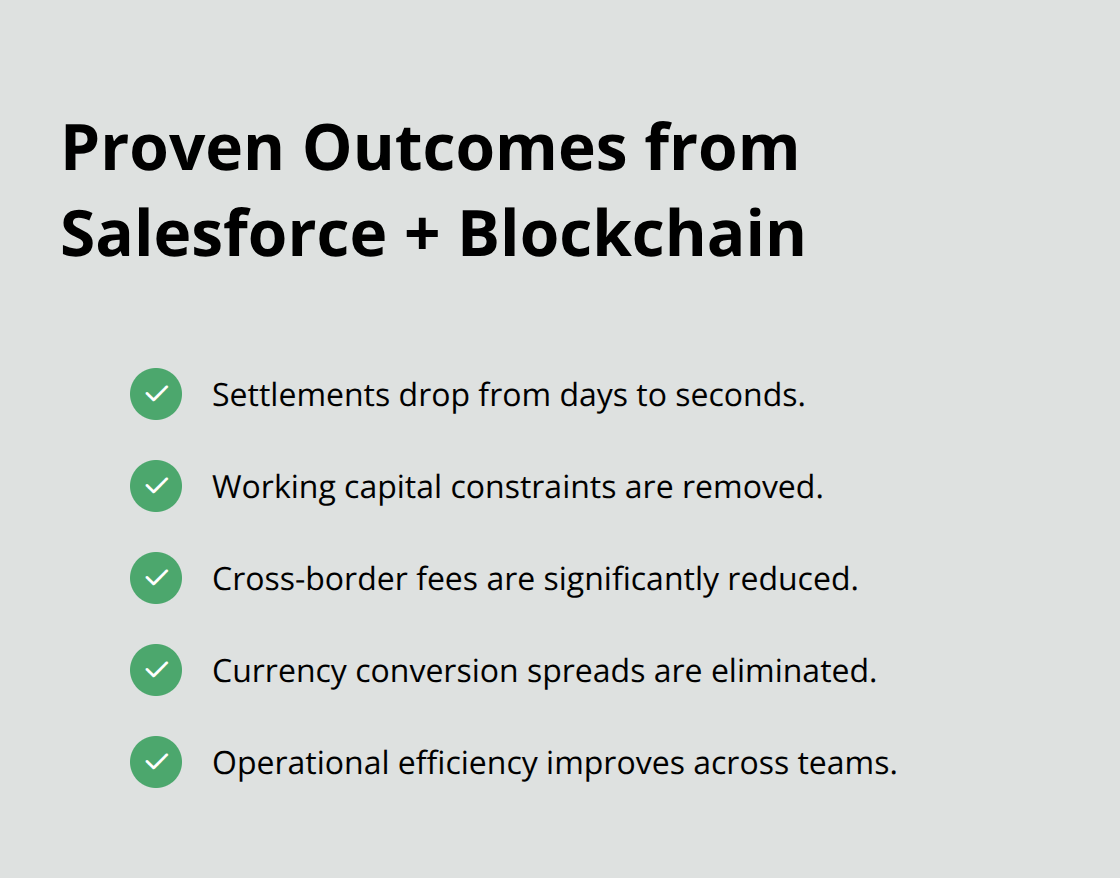
Financial services firms that integrate blockchain payment capabilities within their Salesforce environments experience dramatic operational improvements. Traditional wire transfers that require 3-5 business days now settle within seconds, which eliminates working capital constraints that previously tied up operational cash flow. Companies that handle substantial volumes in annual cross-border transactions achieve significant yearly savings through reduced fees and eliminated currency conversion spreads. The extensive network of companies using Salesforce, including the majority of Fortune 500 firms, represents a substantial market where blockchain integration delivers measurable cost reductions and operational efficiency gains.
Supply Chain Transparency Improvements
Manufacturing companies that implement blockchain transparency solutions report 30-40% reduction in audit preparation time and significantly improved compliance documentation. Smart contracts automate verification processes that previously required manual oversight and extensive paperwork review. Companies track product authenticity and supply chain movements with immutable records that reduce fraud risks and regulatory compliance costs, creating additional value beyond simple operational efficiency.
Digital Asset Management Success Stories
Wealth managers who integrate digital asset capabilities into their Salesforce platforms provide comprehensive client portfolios that include both traditional and cryptocurrency holdings. The rapidly expanding blockchain market demonstrates widespread enterprise adoption that validates efficiency improvements across industries. Financial advisors report increased client satisfaction when they offer complete asset visibility through unified dashboard interfaces that combine conventional investments with digital assets.
Final Thoughts
Blockchain ROI measurement demands precise tracking of payment processing cost reductions, operational efficiency gains, and revenue expansion opportunities. Companies that monitor transaction fee savings, settlement time improvements, and administrative cost reductions achieve the strongest returns on blockchain investments. Implementation success depends on establishing baseline metrics before deployment and measuring improvements quarterly.
Focus on high-volume international payment processes where blockchain delivers immediate cost benefits. Start with pilot programs that target specific use cases like contractor payments or cross-border transactions to demonstrate measurable value. Planning your blockchain integration requires selecting solutions that integrate seamlessly with existing Salesforce infrastructure (this approach minimizes disruption while maximizing returns).
Web3 Enabler provides native Salesforce support for cryptocurrencies and digital assets, enabling faster global payments that settle in seconds at reduced costs. Companies that implement blockchain solutions report improved cash flow, lower administrative overhead, and enhanced client satisfaction. These measurable benefits justify implementation investments and support long-term strategic growth objectives.