



The blockchain industry moves through predictable patterns of excitement and skepticism. Smart business leaders can time their entry to maximize returns while minimizing risks.
We at Web3 Enabler have watched companies succeed by understanding the hype cycle for blockchain business. The key lies in separating genuine opportunities from market noise and acting at the right moment.
Where Blockchain Stands Today
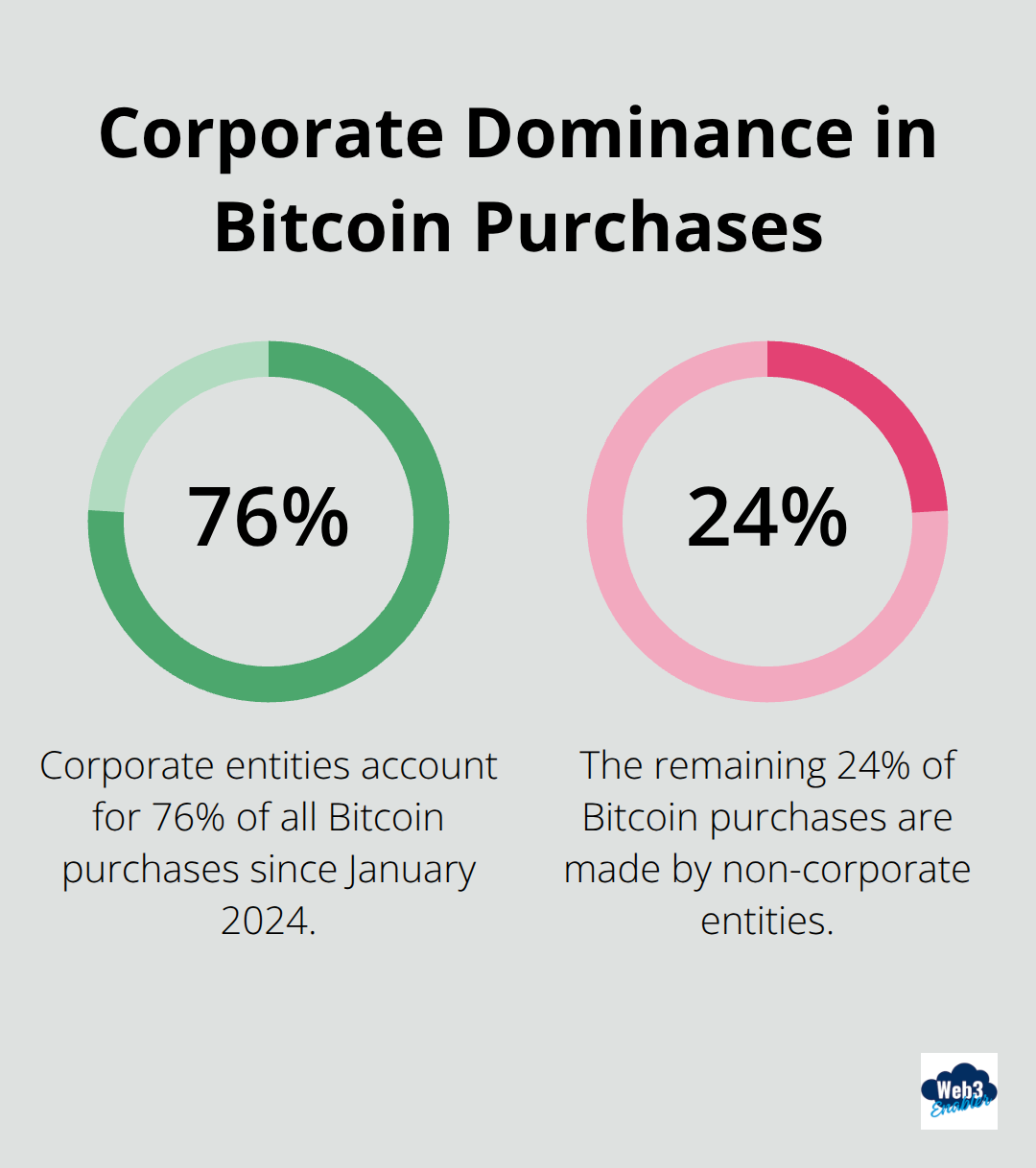
Blockchain adoption has reached a fascinating inflection point where institutional money flows in while retail speculation cools down. Institutional investors now hold $27.4 billion in Bitcoin ETFs, which marks a 113% increase over the past quarter according to recent market data. This shift signals we’ve moved past the initial hype phase into practical implementation. Corporate entities account for 76% of all Bitcoin purchases since January 2024, which shows that serious business adoption drives the current cycle rather than speculative retail trades.
Financial Services Lead the Charge
Banks and payment processors dominate blockchain integration because the technology solves real problems they face daily. Traditional banking settlement periods of 1-3 days contrast sharply with blockchain’s near-instant processing capabilities. Major financial institutions tokenize assets as the broader blockchain technology market is estimated at $31 billion in 2024 and projected to exceed $390 billion by 2030, with platforms that facilitate the movement of traditional finance on-chain. The numbers don’t lie – blockchain can reduce transaction costs by up to 30% according to World Economic Forum research, which makes it attractive for businesses that process high volumes of payments.
Supply Chain and Healthcare Follow Close Behind
Supply chain management represents the second wave of practical blockchain adoption. IBM’s Food Trust blockchain already traces food products to reduce contamination risks, which shows measurable results in safety improvements. Healthcare organizations implement blockchain for secure, immutable record-keeping that enhances accuracy while it maintains patient privacy. These industries chose blockchain not because of hype but because it addresses specific operational challenges that traditional systems struggle to solve efficiently.
Market Maturation Creates New Opportunities
The consolidation around established cryptocurrencies (Bitcoin constitutes 64% of total crypto market value) indicates a shift toward proven technologies. Regulatory clarity from frameworks like the Strategic Bitcoin Reserve provides structural support for crypto markets. This maturation phase reduces volatility and increases predictability, which creates ideal conditions for businesses to evaluate their blockchain strategy without the extreme market swings that characterized earlier cycles.
When Should Your Business Enter the Blockchain Market
The blockchain hype cycle creates four distinct phases that determine your implementation costs and success probability. The accumulation phase lasts 6-12 months with low volumes and minimal retail interest. Implementation costs drop by 40-60% as service providers compete for clients and talent becomes more affordable. The markup phase follows with institutional capital that drives 50-200% price appreciation over 8-12 months. This phase offers the optimal entry point for businesses that want proven use cases without peak costs. Distribution phases bring euphoric sentiment and spikes in Google searches for blockchain solutions, which signals maximum cost and minimum strategic value for new implementations.

Early Adopters Capture Market Share While Late Movers Pay Premium Prices
Companies that implemented blockchain payment systems during 2022-2023 accumulation phases now process transactions faster than competitors while they pay less in implementation costs. These early adopters secured partnerships with established providers before demand peaked. This approach gave them first-mover advantages in client acquisition and operational efficiency.
Late movers face harsh realities when they enter distribution phases. They encounter higher fees, longer timelines due to resource scarcity, and increased competition for skilled blockchain developers. The data shows clear patterns: businesses that enter accumulation or early markup phases achieve ROI within 18-24 months, while late-phase entrants require 36-48 months to break even on their blockchain investments.
Calculate Implementation Costs Based on Market Conditions
Smart businesses track three key metrics before they commit to blockchain implementation. Developer hourly rates fluctuate significantly between accumulation and distribution phases. Integration timeline estimates double when hype periods peak. Vendor costs increase substantially when demand exceeds supply.
The current market shows strong institutional adoption trends. This data indicates we’re in transition from markup to early distribution phase – still favorable for strategic implementations but it requires faster decisions to avoid peak costs.
Market Timing Affects Long-Term Success Rates
Historical analysis reveals that companies entering blockchain markets during accumulation phases maintain higher success rates compared to distribution-phase entrants. The reason lies in resource availability and realistic expectations. Accumulation phases provide access to experienced developers, reasonable vendor rates, and proven case studies without the pressure of inflated expectations.
Distribution-phase implementations often fail because businesses rush decisions under market pressure. They pay premium rates for rushed timelines and face unrealistic performance expectations set by hype rather than practical outcomes.
These market dynamics directly impact how businesses should approach their blockchain payment strategy and vendor selection process.
What Real Business Problems Does Blockchain Solve
Businesses waste millions annually on payment delays and excessive transaction fees. Traditional banks force companies to wait 1-3 days for settlements while they charge 2-4% in fees. Blockchain eliminates these bottlenecks through direct peer-to-peer transactions that settle in minutes rather than days. Companies that process $10 million in annual payments save $200,000-$400,000 yearly when they switch to blockchain-based systems (according to World Economic Forum research).
Payment Speed Transforms Cash Flow Management
Settlement delays destroy cash flow for companies. A manufacturer waits three days for customer payments while suppliers demand immediate payment. This creates constant working capital pressure. Blockchain payments settle within minutes, which transforms how businesses manage their cash cycles. Companies now offer net-15 terms instead of net-30 because they receive funds faster. This competitive advantage helps them win contracts against slower competitors while they improve supplier relationships through faster vendor payments.
Supply Chain Transparency Meets Compliance Demands
Supply chain transparency requirements increased dramatically since 2023 as regulations demand proof of ethical sources. Blockchain creates immutable records that track products from origin to consumer. Food companies that use blockchain traceability systems benefit from enhanced transparency and improved automation. They identify affected batches instantly instead of expensive recalls across entire product lines. This precision saves millions in recall costs while it protects brand reputation during crisis situations.
Transaction Cost Reduction Delivers Immediate ROI
Processing fees accumulate quickly for high-volume businesses. A company that handles 1,000 transactions monthly at 3% traditional fees pays $36,000 annually in costs alone. Blockchain reduces these fees to under 1% while it eliminates intermediary banks that add additional charges. Manufacturing companies use blockchain for international supplier payments and avoid correspondent fees that range from $25-$50 per wire transfer. These savings compound monthly and provide immediate ROI justification for blockchain implementation projects.

Cross-Border Payments Eliminate Banking Delays
International payments through traditional banks take 3-5 business days and involve multiple intermediaries. Each intermediary adds fees and potential delays. Blockchain enables direct cross-border transactions that settle within hours regardless of geography or time zones. Companies that export goods receive payments faster, which improves their cash conversion cycles. Import businesses pay suppliers immediately, which strengthens relationships and often secures better pricing terms through prompt payment discounts.
Final Thoughts
The hype cycle for blockchain business creates predictable windows of opportunity that smart leaders can exploit. Companies that enter during accumulation or early markup phases achieve ROI within 18-24 months while late movers struggle with premium costs and extended timelines. The current market shows institutional adoption at 76% of Bitcoin purchases, which signals optimal timing for strategic implementations.
Successful blockchain adoption requires focus on specific business problems rather than technology trends. Payment processing improvements deliver immediate value through faster settlements and reduced fees. Supply chain transparency meets compliance demands while transaction cost reductions provide measurable ROI (these practical applications matter more than market sentiment or speculative price movements).
Common implementation failures stem from poor timing and unrealistic expectations. Businesses that rush decisions during distribution phases pay premium rates for rushed timelines and face inflated performance expectations that technology cannot meet. Web3 Enabler helps companies implement blockchain technology strategically rather than reactively, which maximizes success probability while it minimizes implementation risks.