


![Flexible Payment Terms Using Stablecoin Technology [2025]](https://web3enabler.com/wp-content/uploads/emplibot/stablecoin-terms-hero-1764936594.jpeg) Payment terms that actually work for your business? Revolutionary concept, right? Traditional payment systems love making you wait weeks for settlements while charging fees that would make a loan shark blush.
Payment terms that actually work for your business? Revolutionary concept, right? Traditional payment systems love making you wait weeks for settlements while charging fees that would make a loan shark blush.
We at Web3 Enabler know there’s a better way. Stablecoin terms are transforming how businesses handle payments, offering instant settlements and predictable costs that make your CFO do a happy dance.
How Do Stablecoins Transform Payment Terms
Flexible payment terms used to mean you picked between 30, 60, or 90-day payment windows while you prayed that international transfers wouldn’t vanish into banking limbo. Traditional systems lock businesses into rigid structures where a wire transfer to Europe takes 3-5 business days and costs an average of 6.18% in fees. Stablecoins flip this script entirely.
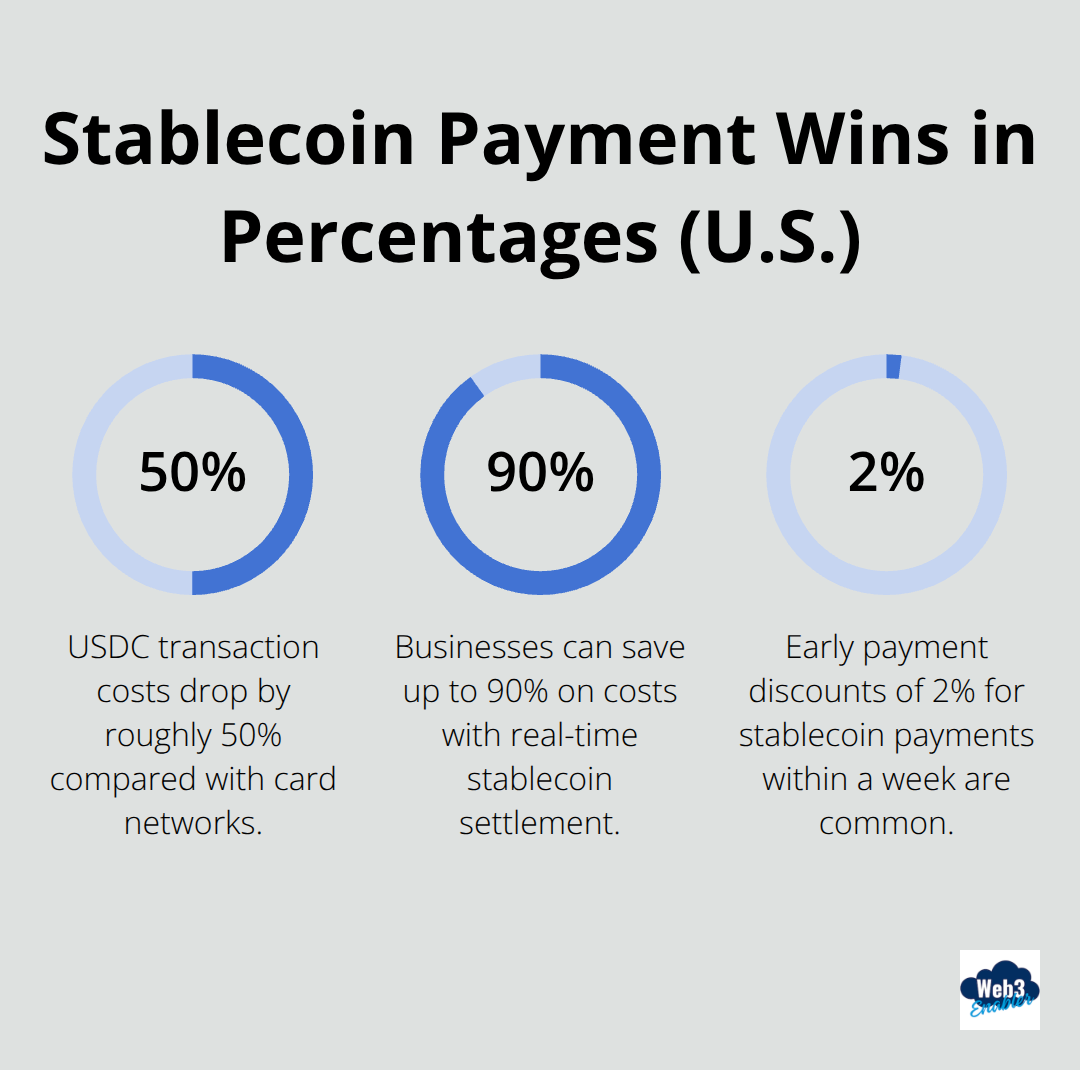
USDC transactions settle in minutes with transaction costs dropping by roughly 50% compared with card networks, which gives businesses the power to offer payment terms that actually make sense for their cash flow.
Real-Time Settlement Changes Everything
Payment processors traditionally charge 2% to 5% per transaction while they make you wait days for settlement. Stablecoins operate 24/7 on blockchain networks and process payments in seconds rather than the typical 45-90 day payment cycles that strangle your capital. Companies now offer 2% discounts for stablecoin payments within 7 days instead of months-long waits for traditional wire transfers. This shift saves businesses up to 90% on costs while it improves cash flow predictability.
Global Payments Without the Drama
International B2B transactions become straightforward when stablecoins eliminate currency conversion delays and foreign exchange fees. A software company can invoice clients in Japan with USDC, receive payment within minutes, and avoid the intermediaries that typically add 2-3 days to settlement times. Supply chain operations benefit most dramatically (companies report payment cycles that shrink from weeks to days when they switch to stablecoin payments for cross-border supplier transactions).
Smart Terms That Adapt to Business Needs
Stablecoins enable dynamic payment structures that traditional banks can’t match. Businesses create tiered discount systems where early payments receive better rates, or they offer extended terms for loyal customers without the usual banking penalties. The transparency of blockchain records means both parties can track payment status in real-time (no more “the check is in the mail” excuses). These flexible arrangements help businesses optimize their working capital while they maintain strong vendor relationships.
The cost savings and speed improvements are just the beginning. The real magic happens when businesses start to see how these payment innovations transform their entire financial operations.
Why Your Finance Team Will Love Stablecoin Payments
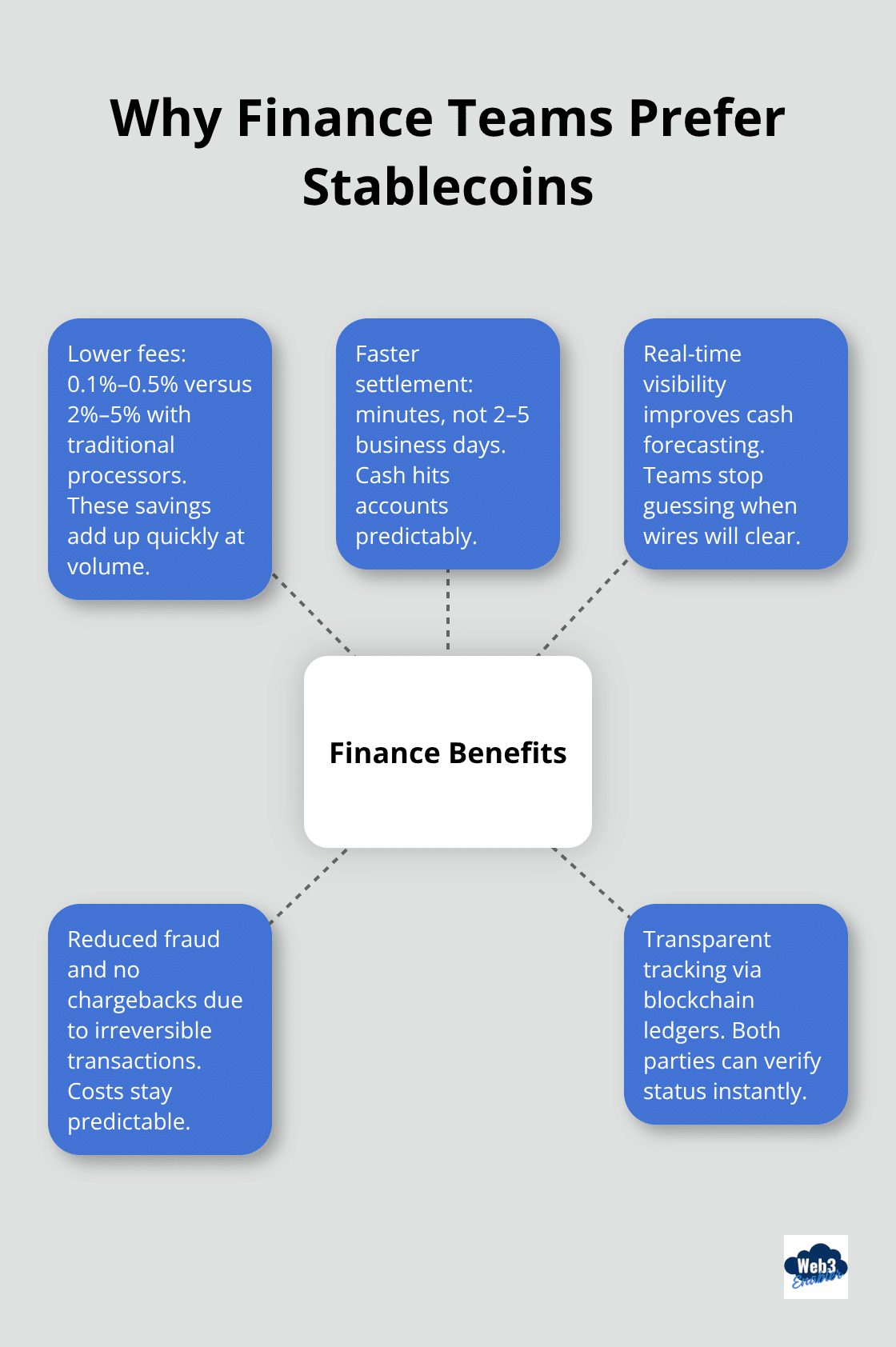
Your finance team spends too much time chasing payments and watching money disappear into transaction fees. Stablecoin payments solve both problems with transaction costs between 0.1% and 0.5% compared to the 2% to 5% that traditional payment processors charge. Settlement happens in minutes instead of the 2-5 business days that banks require, which means your accounts receivable team can actually predict when money hits your account.
Transaction Costs That Actually Make Sense
International wire transfers cost an average of 6.18% in fees, but stablecoin transactions for cross-border payments cost between 0.1% and 1%. A manufacturing company that processes $500,000 in monthly international payments saves $25,000 annually just on transaction fees when it switches to USDC payments. The math gets better with volume since stablecoin fees stay flat while traditional banking fees scale with transaction size.
Cash Flow Becomes Predictable Again
Traditional payment cycles stretch to 45-90 days while stablecoin payments can reduce this to 1-7 days with early payment incentives. Companies offer 2% discounts for stablecoin payments within a week, which still saves money compared to traditional processing fees. Real-time settlement means finance teams know exactly when payments arrive instead of guessing when wire transfers will clear (no more refresh button marathons on your banking portal).
Global Payments Without Banking Drama
Stablecoins eliminate foreign exchange fees and currency conversion delays that add 2-3 days to international transactions. A software company that invoices clients across five countries processes all payments in USDC and receives funds within minutes regardless of the client’s location. The blockchain ledger provides complete transaction transparency so both parties can track payment status without calling banks or payment processors.
Risk Management Gets Simpler
Traditional payment systems expose businesses to currency fluctuation risks and chargebacks that can reverse transactions months later. Stablecoins maintain their dollar peg (USDC holds a 1-to-1 value with USD) and create permanent transactions that can’t be reversed maliciously. Finance teams appreciate the predictable costs and reduced fraud risk that comes with blockchain-based payments.
These operational improvements create the foundation for more strategic financial management, but the real transformation happens when businesses start to integrate stablecoin infrastructure with their existing systems.
How Do You Actually Implement Stablecoin Payments
Most businesses want stablecoin payments but get stuck when they choose between dozens of wallet providers and blockchain networks. Circle’s USDC runs on Ethereum, Polygon, and Avalanche networks, but Ethereum transactions cost $15-50 during peak usage while Polygon transactions cost under $0.01. Smart businesses pick Polygon or Avalanche for routine payments and reserve Ethereum for large transactions where the security premium justifies higher fees. Licensed providers like Circle, Paxos, and Coinbase Prime offer regulatory compliance and insurance coverage that crypto-native wallets don’t provide.
Connect Your Systems to Blockchain Networks
Your ERP system won’t magically connect to blockchain networks, which means you need middleware that bridges traditional accounting with stablecoin transactions. Salesforce users get the easiest path since native blockchain solutions connect directly to existing workflows through the AppExchange. QuickBooks and SAP users need third-party connectors or API integrations that can cost $10,000-50,000 for enterprise implementations. Most businesses start with a hybrid approach where stablecoin payments flow through a separate system that syncs with their main accounting platform twice daily.

Handle Compliance Requirements Upfront
AML and KYC requirements apply to stablecoin transactions just like traditional payments, but the verification process happens upfront rather than per transaction. Businesses must verify customer identities before they accept stablecoin payments (this typically takes 2-3 business days for initial setup). Licensed stablecoin providers handle most compliance automatically, but businesses still need policies for transaction monitoring and suspicious activity reports.
Leverage Blockchain Records for Audits
The permanent blockchain record actually simplifies audits since every transaction gets timestamped and recorded immutably. This reduces the paperwork burden that traditional banking creates while it provides complete transparency for both parties. Finance teams can track payment status in real-time without calls to banks or payment processors, which eliminates the guesswork that comes with traditional wire transfers.
Final Thoughts
Stablecoin terms represent the biggest shift in business payments since credit cards arrived in the 1970s. Transaction costs drop from 2-5% to 0.1-0.5%, settlement times shrink from days to minutes, and international payments become as simple as domestic transfers. Your finance team gets predictable cash flow instead of wild guesses about when wire transfers will clear.
The payment landscape will continue to evolve as regulatory frameworks like the CLARITY Act provide clearer guidelines for stablecoin adoption. Companies that implement these systems now gain competitive advantages through lower costs and faster operations. Early adopters report payment cycles that compress from 45-90 days to 1-7 days with proper incentive structures (and the math only gets better with volume).
Implementation doesn’t require a complete system overhaul. Start with high-volume international transactions where the cost savings hit hardest, then expand to domestic payments as your team gains confidence. Web3 Enabler provides Salesforce-native blockchain solutions that integrate directly with existing workflows, which makes the transition smoother for businesses already on Salesforce infrastructure.