


Your ERP system handles everything-except getting paid faster. Traditional payment rails move at a snail’s pace, your reconciliation team drowns in spreadsheets, and cross-border transactions eat into margins you can’t afford to lose.
USDC interoperability with ERP changes that equation. At Web3 Enabler, we’ve seen firsthand how stablecoin payments slot directly into your existing workflows, cutting settlement times from days to minutes and killing the manual data entry that bleeds time and money.
Why Your ERP Stops Dead at the Payment Line
The ERP-to-Payment Gap
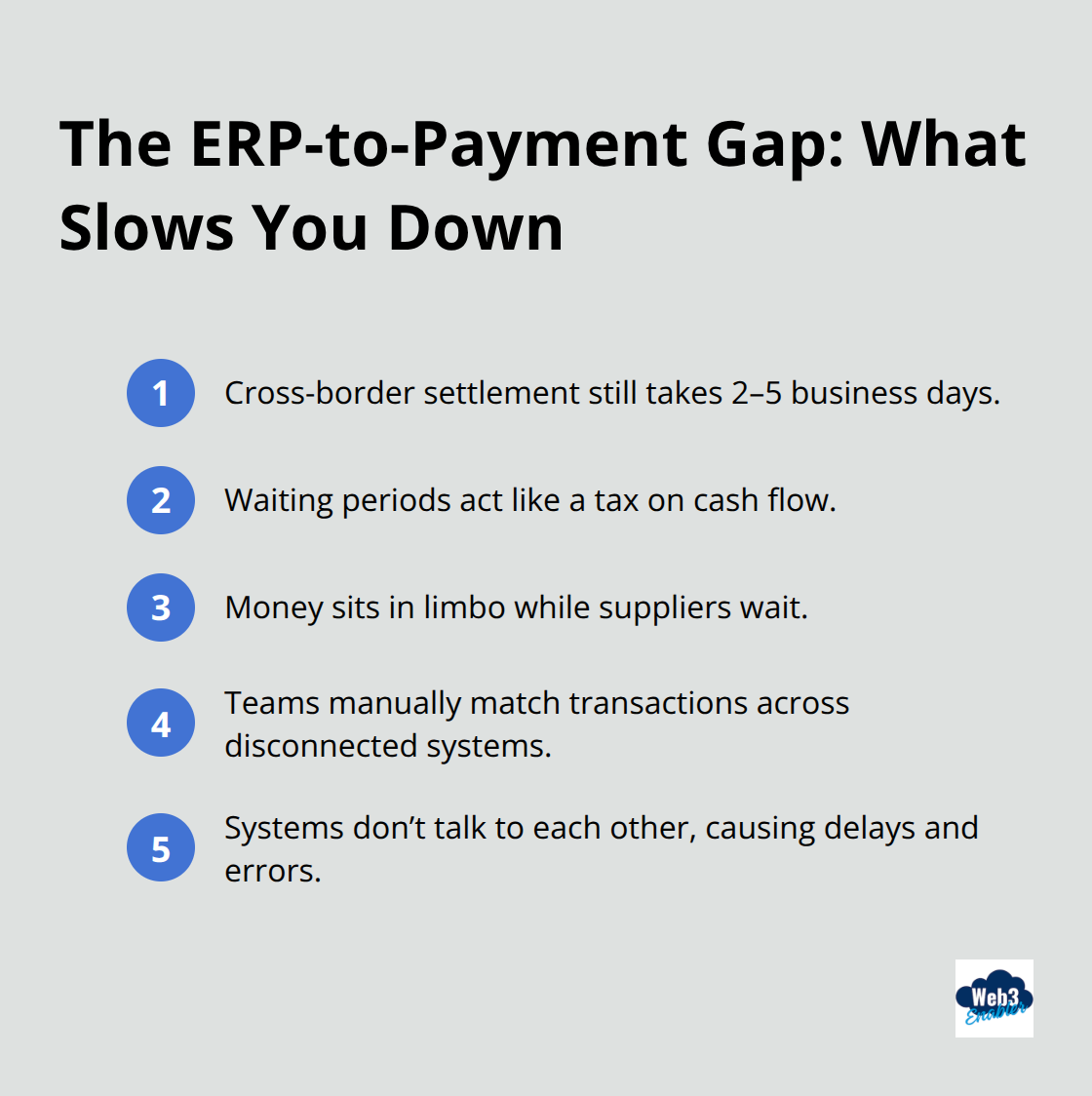
Your ERP tracks every transaction, every invoice, every penny-right up until the moment you actually need to get paid. Then it hands off to payment systems built in the 1990s, and you’re stuck waiting. Traditional banking rails settle cross-border payments in 2–5 business days. That’s not a feature; that’s a tax on your cash flow. During those days, your money sits in limbo while your suppliers wait and your reconciliation team manually matches transactions across systems because nothing talks to anything else.
The Real Cost of Slow Payments
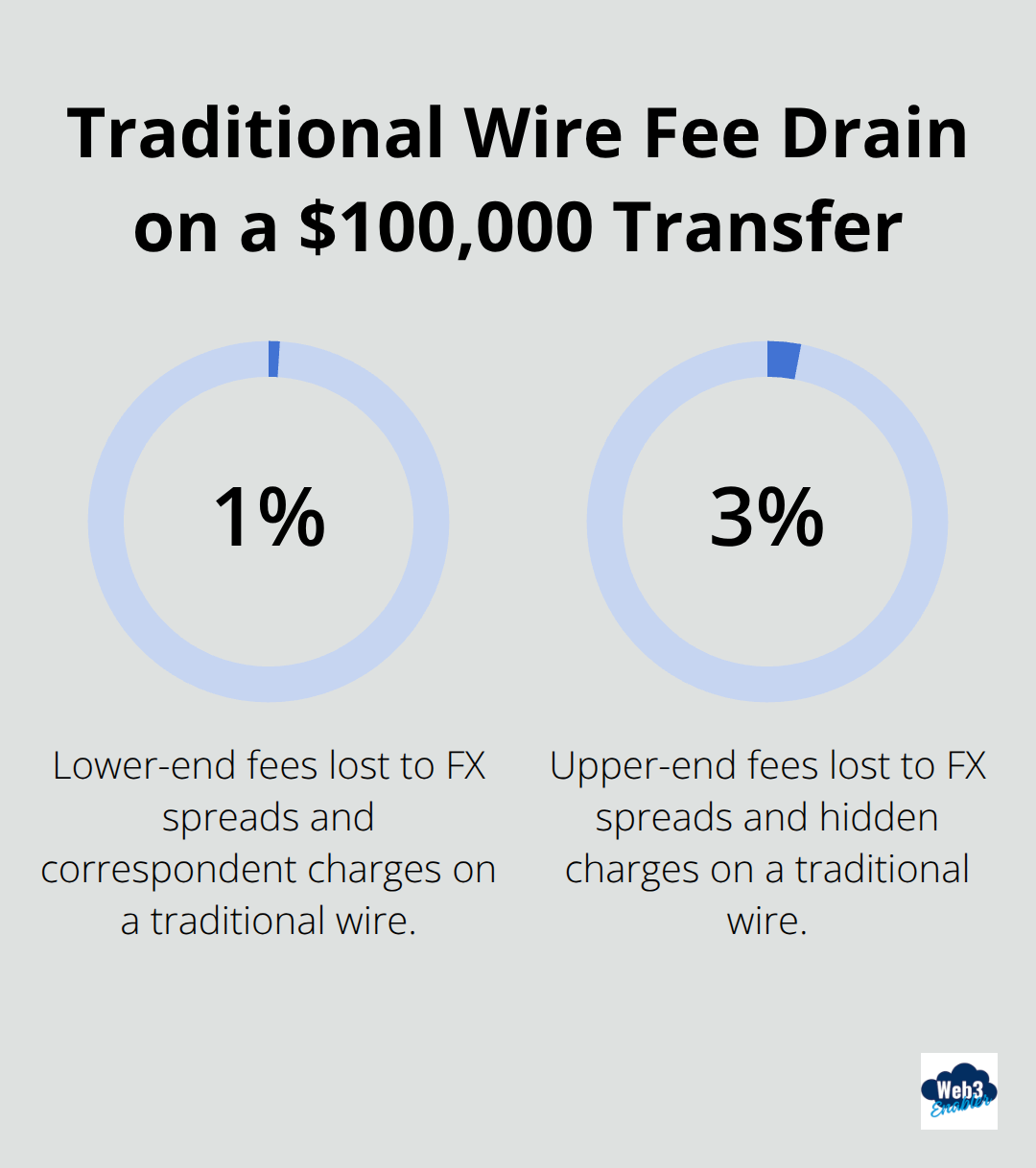
The math is brutal: cross-border fees rack up charges when you factor in FX spreads, correspondent bank charges, and all the hidden costs buried in wire transfer quotes. A company sending $100,000 to vendors overseas loses thousands just moving the money. Multiply that across dozens of suppliers in different regions, and you’re bleeding six figures annually on fees alone.
Why Reconciliation Becomes a Nightmare
Your ERP ledger and your payment system live in separate worlds. A payment clears in your bank account, but your AR team doesn’t know for three days. Invoices marked paid in Salesforce don’t match the actual settlement. Manual reconciliation becomes a weekly firefight where someone digs through spreadsheets, hunting for discrepancies that should never exist. This isn’t inefficiency; it’s structural-your systems were never designed to talk directly to payment rails, so every transaction requires human translation.
How USDC Rewires the Equation
USDC moves money at blockchain speed (minutes, not days) and plugs directly into your ERP without intermediaries. Settlement happens on-chain, instantly, and your systems verify it happened before your team even starts their morning coffee. The cost? A few cents per transaction instead of percentages. Companies piloting stablecoin settlement report dropping their cross-border fees significantly when they use USDC and liquid on-ramps. That same $100,000 transfer now costs a fraction of traditional methods.
More importantly, the money moves in real time. Your ERP sees it settle immediately. No three-day gap. No reconciliation nightmare. No FX guessing game. The payment appears in your ledger at the same moment it clears on-chain, which means your cash flow forecasts actually reflect reality instead of assumptions. This isn’t about crypto speculation or decentralized finance ideology-it’s about taking a broken payment system and replacing it with one that matches the speed of modern business.
The question isn’t whether stablecoin rails work. The question is how fast you can wire them into your existing infrastructure without blowing up your workflows.
What USDC Actually Does for Your Bottom Line
Stripping Away the Middlemen
USDC removes the intermediaries that eat your margins. Instead of waiting for correspondent banks to shuffle your money through a chain of institutions, USDC settles directly on blockchain in minutes. That matters because your cash flow isn’t theoretical-it’s the difference between paying vendors on time and negotiating extensions. When you send $100,000 to a supplier in Europe via traditional wire, you lose 1–3% to FX spreads, correspondent fees, and hidden charges. The same transfer in USDC costs a few cents.
Over a year, a company processing $10 million in cross-border payments saves tens of thousands by cutting those bleed points out entirely.
Speed Compounds Your Advantage
Settlement speed multiplies that savings. Money arrives in minutes instead of 2–5 business days, which means your cash flow forecast actually matches reality instead of requiring a three-day buffer for transactions in flight. Your reconciliation team stops chasing phantom payments that exist in one system but not another. The transaction lives on-chain where both you and your counterparty can verify it happened, eliminating the guessing games that plague traditional settlement.
Your ERP Finally Speaks the Same Language
Integrating USDC into your ERP means your payment system and your ledger operate in sync. Stripe now processes USDC payments globally with settlement to fiat balances, supporting 125+ payment methods across 195 countries in 135+ currencies, so you can accept stablecoin payments without forcing customers into unfamiliar infrastructure. When a payment clears, your ERP sees it immediately because the transaction lives on-chain. No reconciliation lag. No three-day gap between payment clearing and ledger posting. Companies piloting stablecoin workflows report dramatic acceleration in their close cycles-invoices marked paid actually match settlement within minutes.
How the Practical Setup Works
The typical workflow looks straightforward: a vendor or customer sends USDC directly to your wallet, the payment appears in your ERP instantly, and your treasury team converts to fiat immediately or holds the stablecoin depending on liquidity needs. This works because stablecoin infrastructure has matured beyond speculation into genuine business plumbing. USDC’s backing by reserves held off-chain by custodians, combined with regulatory clarity from frameworks like the GENIUS Act passed in 2025, means institutions now treat stablecoins as a legitimate settlement rail rather than a crypto experiment.
Why Your Competitors Are Already Moving
Your competitors aren’t waiting for perfect conditions-they’re already moving payments on-chain and capturing the efficiency gains while you’re still reconciling spreadsheets from last week. The infrastructure exists. The regulatory framework solidifies. The cost advantage compounds quarterly. The only question remaining is whether you’ll integrate stablecoin rails into your existing systems or watch your cash flow efficiency lag behind companies that already have.
Wiring USDC Into Your Existing Systems
The moment USDC hits your wallet, your ERP needs to know about it instantly. This isn’t a nice-to-have-it’s the entire point of moving on-chain. Salesforce users have a structural advantage here because Web3 Enabler, a Salesforce ISV partner, offers 100% Salesforce Native blockchain solutions available on the AppExchange that connect stablecoin payments directly into your existing workflows. The integration works because your AR team stops treating payments as a separate problem. When a customer sends USDC, the transaction appears in your Salesforce ledger within seconds, automatically matched to the correct invoice. No middleware translation. No three-day reconciliation lag. The payment data flows directly from blockchain into your GL posting logic, which means your close cycle accelerates measurably. Companies piloting this setup cut their AR reconciliation time from days to hours because the system eliminates the manual step of hunting for payments across different platforms. Your finance team sees real-time cash position instead of estimates based on payments in flight. You can integrate with your ERP, payroll, or treasury software using APIs or dashboards that support transaction tracking and batch payments. The practical setup involves configuring your Salesforce instance to receive webhook notifications when USDC transactions clear on-chain, then automating the GL posting through your standard revenue recognition workflows. This approach treats stablecoins as a payment method rather than a separate financial instrument, which is exactly how your competitors implement it-and why they close their books faster than you do.
Why Manual Reconciliation Becomes Obsolete
The biggest operational win isn’t speed-it’s the death of manual reconciliation. Your AR team currently spends 15–20% of their time matching payments to invoices across systems that don’t communicate. USDC payments eliminate that entirely because the transaction is immutable on-chain and verifiable instantly by both parties.
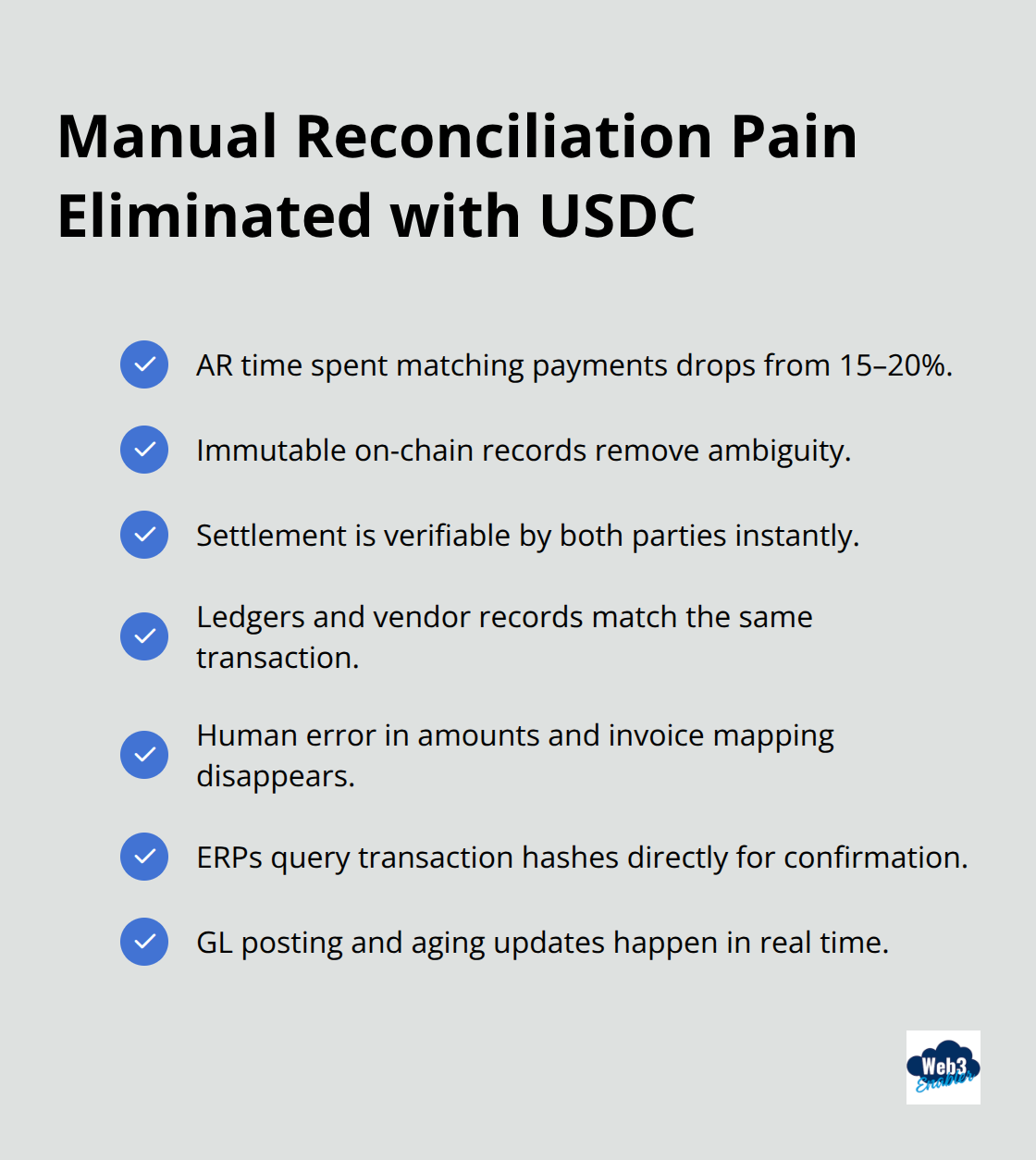
When you send USDC to a vendor, the payment settles with cryptographic finality, meaning there’s no ambiguity about whether it cleared. Your vendor sees it arrive. Your ledger sees it depart. Both records match perfectly because they reference the same on-chain transaction. This matters operationally because human error disappears. No typos in payment amounts. No confusion about whether a payment applied to invoice A or B. The blockchain provides a single source of truth that both you and your counterparty reference simultaneously. For companies processing high-volume international payments, this becomes transformative. A business sending 50+ cross-border payments monthly currently manages reconciliation across email confirmations, bank statements that arrive days late, and spreadsheets requiring manual verification. With USDC, each payment generates a transaction hash that your ERP queries directly. Your system verifies settlement happened, posts the GL entry automatically, and updates your vendor aging report in real time. The operational friction that currently consumes your finance team’s bandwidth simply evaporates.
Setting Up Custody and Fiat Conversion Without Breaking Your Workflow
The practical question everyone asks is where the money actually sits. You don’t need to become a crypto operations expert to use USDC effectively. Institutional custody providers like Fireblocks and Coinbase Custody handle key management, multi-signature approvals, and security protocols that would take your team months to implement correctly. Your setup works like this: customers or vendors send USDC to a wallet managed by your custody provider, your ERP receives notification, and you convert to fiat immediately through Stripe or hold USDC depending on your liquidity strategy. The custody layer handles all the security complexity while your team treats it as a standard payment account in your treasury system. This approach eliminates the false choice between security and usability-institutional custody providers exist specifically to remove that tension. Your finance team operates within familiar processes while the underlying infrastructure handles blockchain complexity. Companies moving international payroll to stablecoin rails report similar patterns: they route payments through providers that manage custody and compliance, then convert to local currency at the destination. The actual operational overhead drops dramatically because you’re not running blockchain infrastructure yourself-you’re plugging into providers that specialize in it. Your ERP integration handles the data flow, your custody provider handles the security and conversion, and your team focuses on business operations instead of cryptographic key management.
Final Thoughts
Enterprise adoption of stablecoins has exploded because the math works. Companies processing cross-border payments report settlement times dropping from days to minutes, and fee structures collapsing from percentages to pennies. The combined stablecoin market cap exceeded $280 billion as of 2025, signaling that institutional adoption moved beyond experimentation into operational reality, and your competitors aren’t waiting for perfect conditions-they’re already wiring USDC interoperability with ERP systems into their cash flow infrastructure and capturing measurable efficiency gains while you manage reconciliation spreadsheets.
The regulatory environment solidified this year. The GENIUS Act passed in 2025, establishing federal reserve standards and audit requirements that removed the compliance uncertainty holding back enterprise adoption. Visa launched USDC settlement in the US, and Mastercard enabled multiple stablecoins on its network, creating mainstream payment rails that your existing systems can leverage without building custom infrastructure. This isn’t fringe technology anymore-it’s becoming standard plumbing for businesses that move money internationally.
We at Web3 Enabler help businesses connect blockchain payments directly into Salesforce without requiring custom development or crypto expertise. Our Salesforce Native solutions on the AppExchange enable you to accept stablecoin payments, send global payments faster, and automate reconciliation within your existing workflows. Start with a single use case-international vendor payments, marketplace payouts, or intercompany transfers-and measure the operational gains.