



Sales teams lose time and money to payment delays. Stablecoins in Salesforce Sales Cloud eliminate settlement friction by moving payments on-chain, where transactions settle in minutes instead of days.
We at Web3 Enabler have built integration patterns that connect stablecoin payments directly to your Opportunities, Contracts, and Commission objects. This guide shows you how to automate deal closures, commission payouts, and invoice settlement without leaving your CRM.
Why Your Sales Team Loses Money on Traditional Payments
Currency Conversion and Settlement Delays Cost Real Money
Sales organizations hemorrhage money through payment delays and currency friction that most finance teams never quantify. When a deal closes in one currency but settlement happens in another, conversion spreads alone cost 1–3% of transaction value.
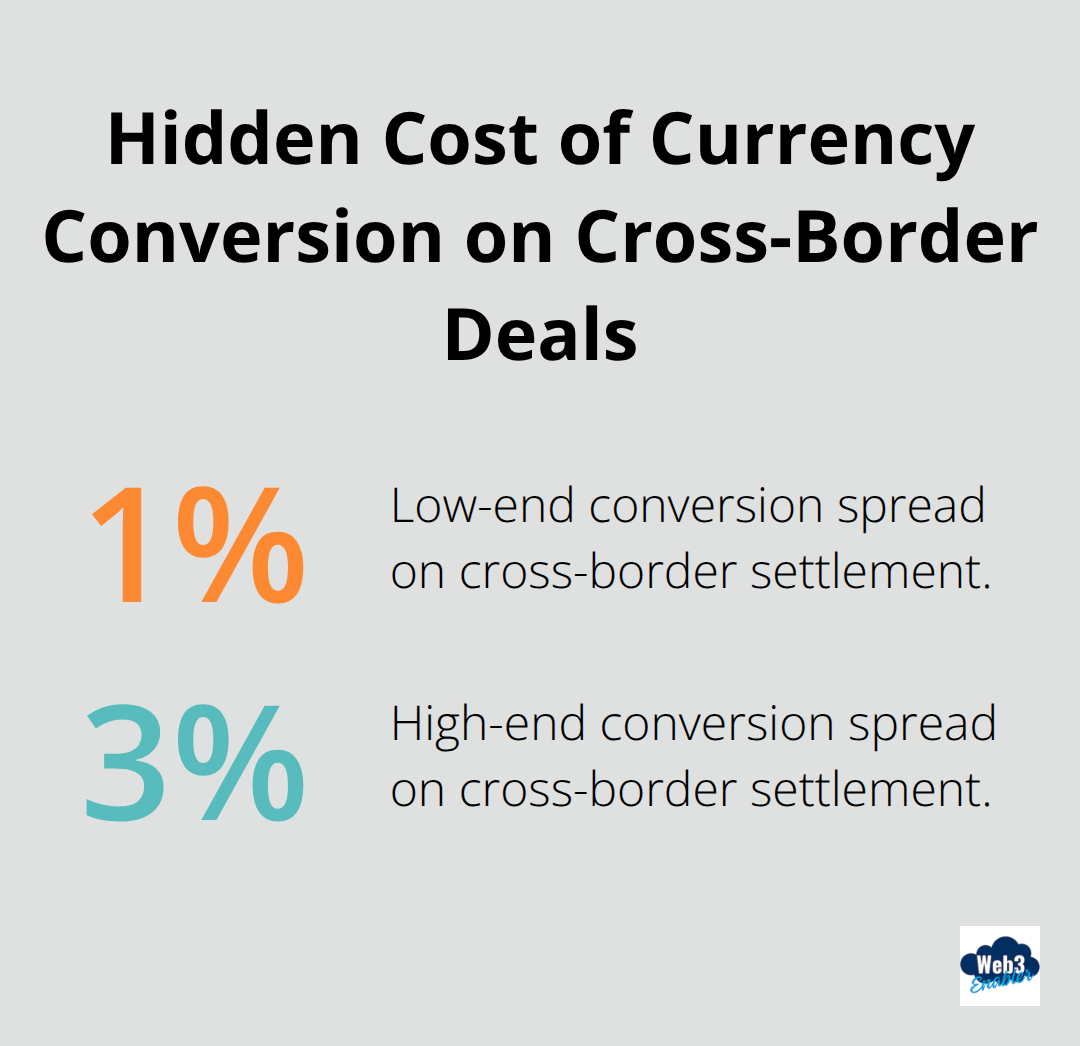
Add banking fees and SWIFT delays averaging 1–3 business days for standard transfers, and the cost compounds quickly. A sales team processing $10 million in monthly deals across borders loses $10,000 to $30,000 monthly just to currency conversion-money that could fund commissions or reinvestment.
Stablecoins eliminate this leak entirely. Transactions settle on-chain in minutes, not days, and 1:1 reserve requirements under regulations like the Genius Act in the US mean no hidden conversion spreads. For global sales teams, this speed matters operationally too. A deal closing on Friday in Singapore that requires payment to an India-based vendor no longer sits in limbo until Monday morning wire processing. The payment executes immediately, the vendor confirms receipt within minutes, and your sales team marks the deal fully closed without waiting for banking infrastructure to catch up.
Operational Visibility Replaces Manual Tracking
Traditional workflows force sales ops teams to manually track ACH transfers, wire confirmations, and currency conversions across spreadsheets and bank portals-a process that breaks visibility and creates reconciliation nightmares. Stablecoins eliminate the operational burden of managing multiple payment rails and currencies within Salesforce.
Web3 Enabler integrates stablecoin payments directly into your Sales Cloud objects, meaning commission payouts, invoice settlements, and deal closures all happen within the CRM with native automation. Every transaction lives on an immutable ledger that feeds directly into your audit trail and reconciliation systems, replacing manual spreadsheet work with real-time data flows.
Institutional Adoption Signals Market Momentum
Real institutional adoption is accelerating this shift. Citi and Emirates NBD launched a 24/7 USD cross-border payments initiative that demonstrates banks now recognize stablecoins as infrastructure, not speculation. Rain, a leading crypto payments platform, raised $250 million in Series C funding specifically to scale institutional stablecoin rails. These aren’t small players-they signal that enterprise payments infrastructure is moving on-chain.
For sales organizations, the practical advantage is straightforward: faster deal closure timing, lower processing costs, and cleaner compliance records (because every transaction lives on an immutable ledger). The next section shows exactly how to build these payment workflows inside Sales Cloud.
How Stablecoin Payments Automate Sales Operations Inside Salesforce
Commission Payouts Execute in Real Time
Commission payouts no longer wait for monthly payroll cycles. When an Opportunity closes, a Flow triggers automatically, validates the deal amount against your Commission object, and executes a stablecoin payout to your sales rep’s wallet in minutes. This shift from monthly to real-time payouts improves rep retention and cash flow visibility immediately. Sales reps see their earnings settle on-chain within minutes instead of waiting weeks for bank processing, which strengthens morale and reduces cash flow uncertainty for your team.
Invoice Settlement Happens Without Manual Reconciliation
Customers pay invoices in stablecoins directly from inside Sales Cloud, and the payment settles on-chain within minutes. Your Accounts Receivable data updates instantly without reconciliation delays. A customer in Singapore paying a USD-denominated invoice no longer waits for bank processing-the transaction settles in minutes with zero currency conversion friction. This eliminates the operational burden of managing multiple payment rails and currencies within Salesforce, replacing manual spreadsheet work with real-time data flows.
Three Core Integration Patterns Drive Automation
The practical setup requires three patterns that work together. First, connect your Commission object to a stablecoin API so that commission calculations trigger payment workflows automatically when deals close.
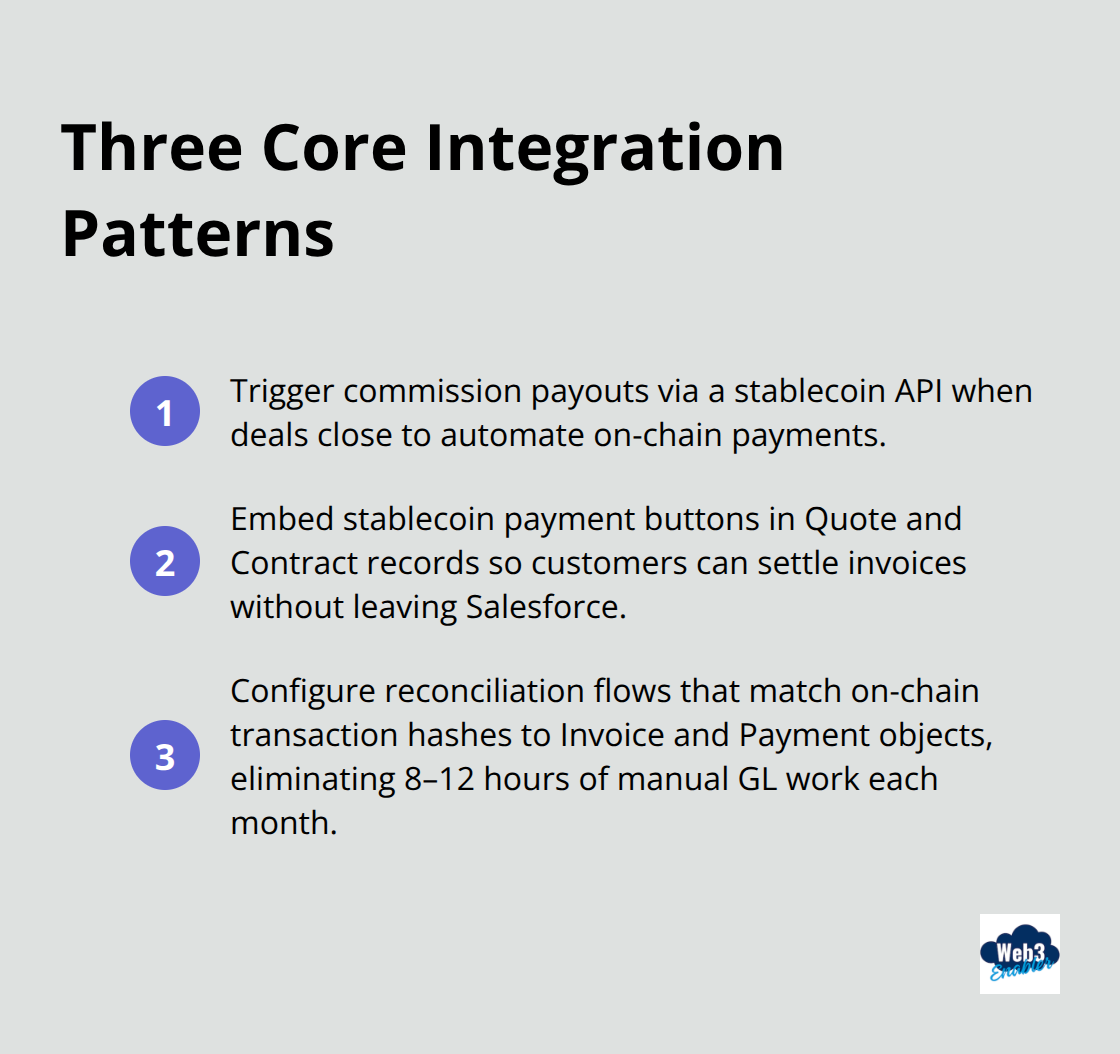
Second, embed stablecoin payment buttons directly into your Quote and Contract objects so customers can settle invoices on-chain without leaving Salesforce. Third, configure Payment Reconciliation Flows that match on-chain transaction hashes to your Invoice and Payment objects, eliminating manual GL reconciliation work that typically consumes 8–12 hours per month for global sales organizations.
Native Architecture Eliminates External Middleware
These workflows run inside your CRM with no external middleware, no API rate-limiting headaches, and full visibility into every transaction. Every transaction lives on an immutable ledger that feeds directly into your Salesforce audit trail, replacing spreadsheet-based tracking with real-time data flows that your compliance and finance teams can audit immediately. Sales teams close deals faster, reps receive payment instantly, and finance teams spend zero time chasing down payment confirmations.
The next section shows you exactly how to connect these patterns to your existing Salesforce infrastructure and payment systems.
Building Stablecoin Payments Into Your Sales Cloud Objects
Wire Opportunity and Contract Data to Payment Workflows
Your Opportunity and Contract objects already contain all the deal data needed to execute stablecoin payments automatically. The key is connecting those objects to trigger payment workflows the moment a deal closes or a customer approves a contract. Your Opportunity Amount, Close Date, and Account Owner fields map directly to a stablecoin payout instruction that executes on-chain without manual intervention. A sales rep closes a deal for $500,000 on Friday afternoon, and a Flow immediately calculates the commission (say, $25,000), validates the amount against your Commission Schedule object, and routes the payout to the rep’s wallet. The entire sequence takes minutes instead of waiting for Monday payroll processing.
To set this up, create a Flow triggered by Opportunity stage changes (typically when you move deals to Closed Won). Add a decision node that checks whether the Amount exceeds your minimum commission threshold, then insert a stablecoin payment action that specifies the recipient wallet address (stored in your Sales Rep record) and the payout amount. This architecture eliminates the manual data entry and approval delays that plague traditional commission workflows.
Embed Payment Buttons Into Quote and Contract Pages
Stablecoin payment buttons embedded directly into your Quote and Contract record pages let customers settle amounts in USDC or USDT without leaving Salesforce. This eliminates the friction of redirecting customers to external payment gateways, which typically add 2–5 business days to settlement timelines. When a customer clicks the stablecoin payment button, they authenticate via their wallet, confirm the transaction, and the payment settles on-chain within minutes. Your Invoice record updates automatically with the payment status and on-chain transaction hash, eliminating the reconciliation work that normally consumes 8–12 hours per month for global sales organizations.
Automate Reconciliation Through On-Chain Verification
Payment reconciliation automation delivers the biggest operational win. Traditional setups require finance teams to manually match bank statements, wire confirmations, and GL entries-a process that introduces errors and delays month-end close by days. Stablecoins eliminate this friction because every transaction lives on an immutable ledger with a unique transaction hash that you can match directly to your Payment object in Salesforce.
Build a scheduled Flow that runs daily, queries your pending Payment records, and checks the blockchain to confirm whether the corresponding stablecoin transaction has settled. When the Flow finds a match between an on-chain transaction hash and your Payment record, it automatically updates the Payment Status to Received and links the GL account code, eliminating manual data entry entirely. For cross-border deals, stablecoin transaction verification provides a single, verifiable record that cuts reconciliation time from days to minutes because you no longer wait for SWIFT confirmations or currency conversion settlements. A sales team processing $10 million in monthly cross-border deals reclaims roughly 40–50 hours of finance team time monthly through automated verification processes.
Connect to Your Existing Infrastructure Without Custom Middleware
Stablecoin payment integration works with your Accounts Receivable and General Ledger systems through standard Salesforce APIs, meaning you avoid expensive middleware or custom integrations. Your finance and compliance teams maintain full auditability because every stablecoin transaction creates an immutable record that feeds directly into your Salesforce audit trail, satisfying regulatory requirements without additional overhead. This architecture also enables real-time treasury visibility-your CFO can see exactly which invoices have settled on-chain, which are pending, and what cash is available for reinvestment, all from within Salesforce dashboards.
Final Thoughts
Stablecoins in Salesforce Sales Cloud solve a concrete problem that costs sales organizations thousands of dollars monthly: payment delays, currency friction, and manual reconciliation work. Your sales team closes deals faster when commission payouts settle in minutes instead of weeks, while your finance team reclaims 40–50 hours monthly by eliminating manual invoice reconciliation.
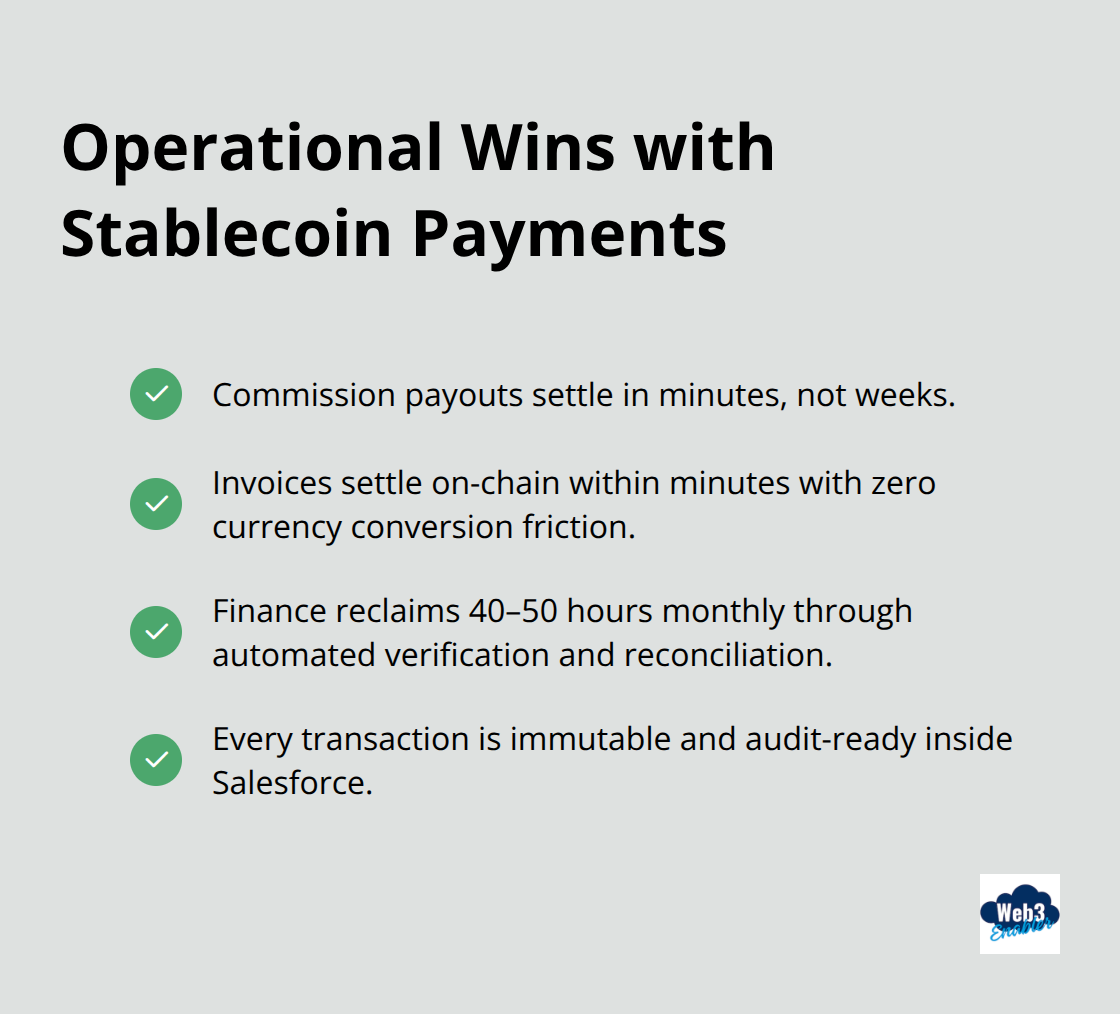
Your customers pay invoices without currency conversion spreads or banking delays, which strengthens relationships and accelerates cash flow.
The shift from traditional payment rails to on-chain settlement inside your CRM isn’t a technology upgrade-it’s a business model change. When stablecoin transactions live on an immutable ledger that feeds directly into your Salesforce audit trail, your compliance team gains full visibility without additional overhead. When payment buttons embed directly into your Quote and Contract pages, customers settle amounts in minutes instead of days, and when Flows automatically match on-chain transaction hashes to your Payment objects, your finance team stops chasing down wire confirmations and starts focusing on strategy.
Web3 Enabler provides the native blockchain platform built specifically for this workflow, offering the only native stablecoin payment solution available on the Salesforce AppExchange that enables your organization to accept and send stablecoin payments directly within Sales Cloud without external middleware or custom integrations. Your sales team, finance team, and compliance team all work inside a single system where every transaction is auditable, immutable, and settled in minutes.