


Your CRM already handles customer relationships. Now it can handle their payments too-without the crypto chaos.
Stablecoin integration in Salesforce means you can accept, send, and track blockchain payments directly from the platform your team uses every day. No wallet juggling. No volatility headaches. Just faster, cheaper transactions that actually work for business.
Why Stablecoins Actually Work for Business
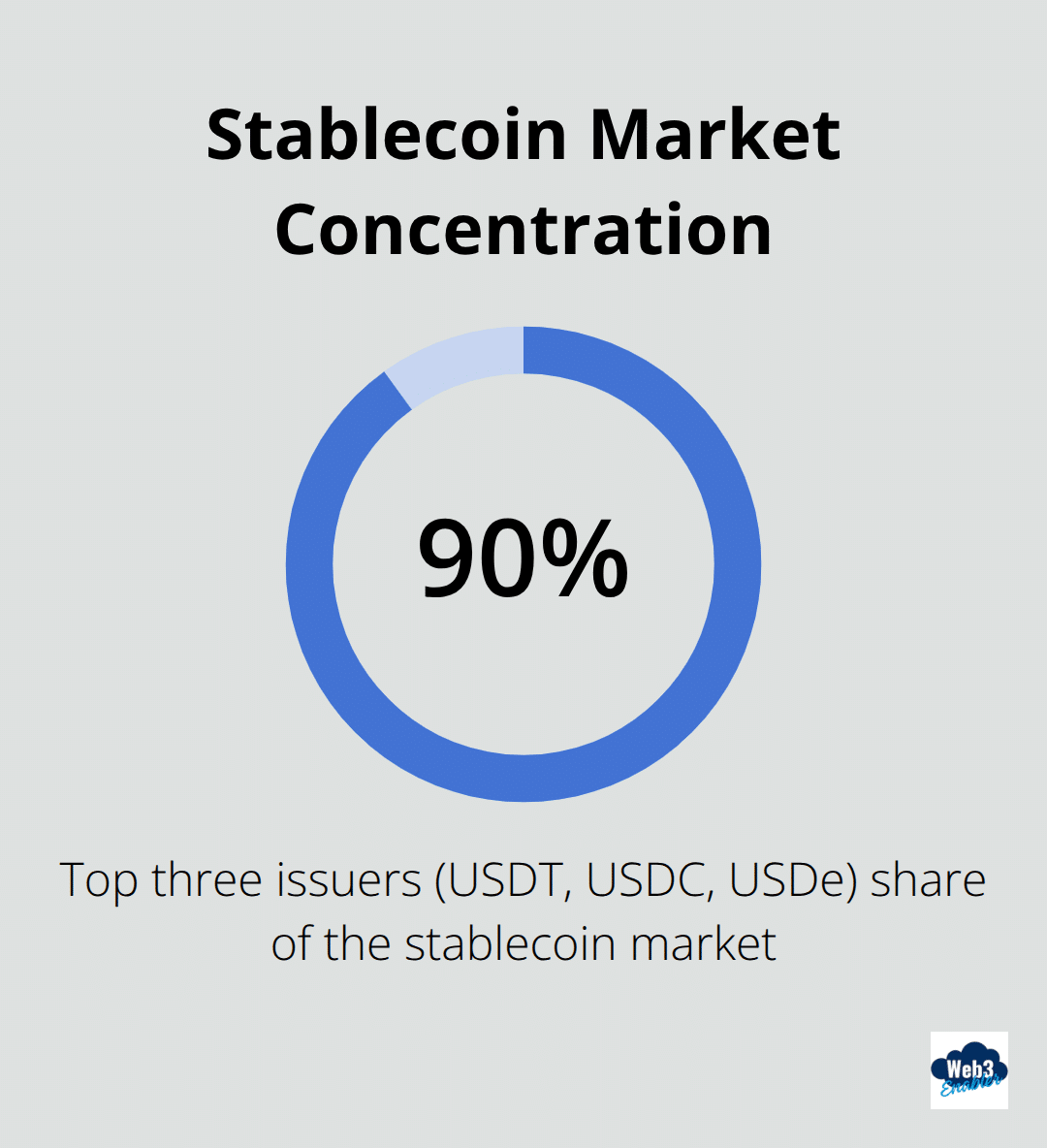
Stablecoins have grown from a $10 billion market in 2020 to roughly $300 billion today, and that explosive growth reflects real business adoption. Unlike Bitcoin or Ethereum, which swing wildly in value, stablecoins like USDC maintain a 1:1 peg to the US dollar. This matters enormously for your finance team. When you pay a vendor in Singapore or collect from a client in London, you need certainty that the payment amount won’t fluctuate by 10% between Tuesday and Thursday. Stablecoins eliminate that guessing game entirely. The top three issuers-USDT, USDC, and USDe-control roughly 90% of the stablecoin market, meaning you work with deeply liquid, battle-tested assets.
Speed That Beats Traditional Banking
Stablecoins enable 24/7/365 operations with near-instant wallet-to-wallet settlement, something traditional payment networks simply cannot match. Your ACH transfer takes three to five days; a stablecoin payment settles in minutes, any day of the week. Cross-border payments through traditional banking cost you 2% to 7% in fees when you factor in currency conversion, correspondent banking charges, and intermediaries. Stablecoins reduce that to roughly 0.2% to 1%-a difference that compounds dramatically across high-volume operations. If you pay $10 million annually to global suppliers, that’s potentially $200,000 to $700,000 in unnecessary fees you could eliminate.
Real Institutional Capital Behind Stablecoins
Stablecoin adoption is accelerating across institutional players. Coinbase reported $18 billion in USDC holdings and $1.4 billion in stablecoin revenue at year-end 2025, demonstrating serious institutional capital flowing into these networks. Fiserv launched INDX, a platform delivering real-time 24/7 USD settlement for digital asset companies, proving the infrastructure exists to move money instantly and cheaply. For Salesforce users managing global accounts, this means faster order-to-cash cycles and better cash flow without waiting for international wires to clear.
Compliance Built Into the Network
The regulatory landscape has matured faster than most people realize. MiCA regulation in Europe took full effect as of June 2024, the GENIUS Act provides clarity in the US, Hong Kong introduced the Stablecoin Ordinance in 2025, and the EU’s MIS package was proposed in late 2025. These frameworks establish robust reserve requirements, strong liquidity standards, asset segregation, and clearly defined redemption rights. Stablecoin issuers face stringent governance and risk management obligations that actually exceed what many traditional payment processors require.

Transparency That Transforms Auditing
On-chain transparency and analytics provide full transaction trails, improving operational control and auditing for corporate finance. Every transaction is recorded immutably, making compliance audits far simpler than digging through bank statements. Programmable stablecoins allow embedded business logic to automate payments and reduce human error and fraud risk within financial workflows. Coinbase and Homeland Security Investigations used blockchain intelligence to forfeit $15 million from a fentanyl vendor, illustrating the enforcement power of on-chain data. That same transparency works for your business-you gain real-time visibility into every payment movement, from customer invoice to vendor settlement. This visibility becomes even more powerful when you integrate stablecoins directly into your CRM, where payment data lives alongside customer and account information.
How Stablecoins Actually Work Inside Salesforce
Native Payments Without Platform Switching
Integrating stablecoins into Salesforce means extending what your CRM already does brilliantly: managing customer relationships, tracking transactions, and automating business processes. You’re not replacing Salesforce or learning a new system. Instead, you add payment capabilities that settle in minutes instead of days, cost a fraction of traditional wires, and leave a permanent audit trail. Web3 Enabler built Salesforce Native blockchain solutions available on the Salesforce AppExchange, meaning stablecoin payment tools live directly inside your Salesforce interface where your team already works. No jumping between platforms. No API wrestling. When your sales team closes a deal, they accept payment in USDC without ever leaving the customer record. When your finance team processes vendor invoices, they send stablecoin payments to suppliers across 50 countries without currency conversion headaches or three-day settlement waits. Your order-to-cash cycle accelerates dramatically, and your global operations become genuinely borderless.
Real-Time Visibility Replaces Batch Reporting
Traditional banking gives your finance team settlement confirmations hours or days after a payment clears, leaving them in the dark about actual cash position. Stablecoins provide immediate, immutable transaction records on the blockchain, so your Salesforce dashboard shows exact payment status the moment it happens. TRM’s blockchain intelligence platform demonstrates this power through real-time risk monitoring and sanctions screening. You gain visibility into every payment movement, compliance status, and transaction counterparty without waiting for batch reports. For multinational companies managing accounts across time zones, your finance team in New York sees the same real-time settlement data as your operations team in Tokyo, eliminating reconciliation delays and reducing fraud risk.
Automation Removes Manual Payment Work
Programmable stablecoins embed business logic directly into payments-you automate milestone-based releases to contractors, conditional vendor payouts, or customer refunds tied to specific account events, all executing without manual intervention. Your accounts payable team stops manually chasing payment confirmations. Your treasury team optimizes liquidity across global subsidiaries in real time. Your compliance team audits transactions with complete, permanent records instead of hunting through fragmented bank statements. This automation transforms how finance teams operate-what once required hours of manual work now happens instantly and transparently on the blockchain.
Where Stablecoins Create Real Business Value
Accelerate Cash Flow with Instant Cross-Border Payments
Your Salesforce dashboard already tracks every customer interaction, invoice, and payment promise. Stablecoin settlement transforms those records from planning documents into execution engines. When a customer in Hong Kong owes you money, you no longer wait three to five business days for an international wire to crawl through correspondent banks. Instead, you send a USDC payment from Salesforce and it arrives in minutes, any time of day. The customer receives exactly what you invoiced because stablecoins maintain a 1:1 peg to the dollar, eliminating the currency conversion games that traditionally cost 2% to 7% in fees.
For a company processing $10 million in annual cross-border payments, that difference means reclaiming $200,000 to $700,000 in unnecessarily wasted fees. Your finance team gains real-time visibility into settlement status through the blockchain, replacing the opacity of traditional banking where payment confirmation arrives hours after funds actually clear.

Compress Your Order-to-Cash Cycle
Vendors get paid faster when stablecoins replace traditional wires. Customers settle invoices immediately instead of waiting for bank processing windows. Your order-to-cash cycle compresses dramatically because you eliminated the waiting game entirely. Traditional banking leaves your finance team in the dark about actual cash position until settlement confirmations arrive hours or days after a payment clears. Stablecoins provide immediate, immutable transaction records on the blockchain, so your Salesforce dashboard shows exact payment status the moment it happens.
You gain visibility into every payment movement, compliance status, and transaction counterparty without waiting for batch reports. For multinational companies managing accounts across time zones, your finance team in New York sees the same real-time settlement data as your operations team in Tokyo, eliminating reconciliation delays and reducing fraud risk.
Bring Crypto Holdings Into Your Client View
For wealth management and advisory firms, stablecoin integration in Salesforce solves a different but equally valuable problem. Your financial advisors manage client portfolios that increasingly include digital assets, yet your CRM remains blind to crypto holdings because those assets live in external wallets and exchanges. Blockchain-native tools bring client crypto visibility directly into Salesforce, so advisors see complete portfolio snapshots without jumping between platforms.
When a client holds USDC, Bitcoin, or other digital assets, those positions appear in the same client record where traditional holdings live, enabling genuine portfolio planning and risk assessment. This matters because advisors cannot provide competent advice about asset allocation without understanding what their clients actually own. A client who appears to have $500,000 in traditional investments but holds another $200,000 in stablecoins represents a completely different risk profile than your CRM previously showed.
Eliminate Manual Reconciliation Work
Your operations team stops treating crypto as a separate, mysterious category and starts treating it as what it actually is: another asset class that moves faster and costs less than traditional alternatives. Programmable stablecoins embed business logic directly into payments-you automate milestone-based releases to contractors, conditional vendor payouts, or customer refunds tied to specific account events, all executing without manual intervention.
FAQ: Salesforce Stablecoin Integration & Real-Time Settlement
What is the 2026 status of the GENIUS Act for US businesses?
The Guiding and Establishing National Innovation for U.S. Stablecoins (GENIUS) Act is now in an active rulemaking phase. On April 7, 2026, the FDIC approved a notice of proposed rulemaking to set federal standards for Permitted Payment Stablecoin Issuers (PPSIs). This framework requires FDIC-supervised issuers to maintain specific reserve assets and capital standards. A key benefit for Salesforce users is the new requirement for PPSIs to redeem stablecoins within two business days, providing the predictable liquidity enterprises need for automated treasury management.
How does the Hong Kong Stablecoin Ordinance affect Asian vendor payments?
The Stablecoin Ordinance became effective in August 2025, but regulators are currently focusing on a rigorous vetting process. As of April 2026, the Hong Kong Monetary Authority (HKMA) has extended its timeline for issuing the first batch of licenses to ensure that applicants—including major institutions like HSBC and Standard Chartered—meet strict anti-money laundering and risk-management criteria. While this causes a short-term delay, it ensures that the “green zone” for your Salesforce-triggered payments to Asian suppliers is backed by world-class regulatory oversight.
Is Fiserv INDX available for 24/7 USD settlement?
Yes. Fiserv launched INDX in February 2026 as a real-time cash settlement platform. It allows digital asset companies to store and move real US dollars 24/7/365 with the benefit of up to 25 million dollars in FDIC insurance—100 times the standard limit. By distributing funds across a network of over 1,100 insured financial institutions, INDX creates a secure bridge between traditional banking and digital assets, allowing your Salesforce-native workflows to settle with institutional-grade speed and finality.
What are the 2025 revenue and holding figures for USDC and Coinbase?
Institutional adoption of stablecoins reached record levels in 2025. According to financial filings, Coinbase generated approximately 1.35 billion dollars in stablecoin revenue for the full year of 2025, accounting for nearly 20% of its total net revenue. By December 2025, the average amount of USDC held within Coinbase products hit an all-time high of 17.8 billion dollars. These figures demonstrate that stablecoins are now a fundamental pillar of global financial infrastructure.
What is the scale of the stablecoin market in early 2026?
The stablecoin market has matured into foundational financial infrastructure. In early 2026, the total market capitalization crossed 312 billion dollars, with annual transaction volumes for 2025 reaching a staggering 33 trillion dollars—a 72% increase over the previous year. USDT and USDC continue to dominate the landscape, accounting for 93% of the total market cap. This deep liquidity ensures that enterprises integrating stablecoins into Salesforce can handle high-volume global payouts and collections with minimal slippage and cost.
Final Thoughts
Stablecoins stopped being a crypto experiment years ago. They now solve real business problems: eliminating currency risk, cutting payment costs by 95%, and settling transactions instantly across borders. The $300 billion market cap, institutional adoption from Coinbase to Fiserv, and regulatory frameworks like MiCA prove this technology has matured beyond speculation. Your competitors are already moving money this way.
Stablecoin integration Salesforce removes the last barrier to adoption. Your team works exactly as they do today, except payments move faster, cost less, and leave permanent audit trails. Your sales team accepts USDC from customer records, your finance team sends vendor payments across 50 countries without currency conversion games, and your advisors see client crypto holdings alongside traditional assets. Everything happens inside the platform your business already runs on.
We at Web3 Enabler built solutions specifically for companies like yours. Our Salesforce Native blockchain tools live on the Salesforce AppExchange, meaning stablecoin payments, compliance capabilities, and automation integrate directly into your CRM without platform switching. Web3 Enabler makes stablecoin adoption practical and immediate, whether you process $1 million or $1 billion in annual payments.