



MiCA stablecoins are shaking up the European crypto landscape faster than you can say “regulatory compliance.” The new framework isn’t just paperwork – it’s reshaping how digital currencies operate across the EU.
We at Web3 Enabler see businesses scrambling to understand what this means for their bottom line. The rules are here, and they’re not playing around.
What Does MiCA Actually Require from Stablecoin Issuers?
The European Union doesn’t mess around with stablecoin regulations. MiCA requires stablecoin issuers to back their tokens with high-quality liquid assets and mandates that 100% of stablecoin reserves must exist in liquid assets, with at least 30% in highly liquid instruments like central bank deposits. This requirement has already forced 78% of stablecoins in EU circulation to undergo reclassification by 2025, and approximately 45% of stablecoin issuer applications have faced rejection due to these strict compliance standards.
Authorization Requirements Hit Hard
Every stablecoin issuer needs authorization from National Competent Authorities before they launch in the EU. The process costs serious money – compliance costs now exceed €500,000 annually for 42% of crypto firms, and legal consultation fees range between €50,000 and €200,000 per company. Over 1,200 crypto firms submitted MiCA license requests by mid-2025, but the European Banking Authority maintains strict oversight over large issuers with more than one million users.

Reserve Management Gets Serious
Quarterly audits with at least 95% audit coverage are mandatory, not optional. Issuers must maintain transparent systems and cannot use algorithmic mechanisms for backing. The ECB retains veto authority over large stablecoin issuers it deems systemic risks, which means your business model needs their approval to scale (and they’re not shy about using this power).
Consumer Protection Changes Everything
Market abuse rules now govern 82% of crypto transactions to prevent insider trading and manipulation. Stablecoin issuers face liability rules that require honest and transparent operations in all market activities. Non-compliance brings fines up to €5 million or 5% of annual turnover, plus potential license suspension. The regulatory framework positions institutional confidence higher, with 83% of institutional investors more likely to invest due to MiCA’s comprehensive legal framework.
These requirements create a complex web of obligations that extends far beyond simple reserve management. The real challenge lies in how businesses navigate the multi-jurisdictional maze while maintaining operational efficiency.
How Do You Actually Survive MiCA Compliance?
The compliance maze hits different when you realize that 25% of global crypto firms plan to withdraw from the EU due to elevated MiCA compliance costs. The multi-jurisdictional nightmare starts with the fact that each EU member state interprets certain MiCA provisions differently, which creates a patchwork of requirements that changes as you cross borders. Firms that operate across multiple EU countries face conflicting guidance from National Competent Authorities, with some requiring additional documentation that others don’t even ask for. The European Securities and Markets Authority maintains a register of non-compliant providers, but the criteria for blacklisting varies between jurisdictions (leaving businesses to guess about their actual compliance status).
Technical Systems Need Complete Overhauls
Real-time transaction monitoring systems must achieve low latency detection for suspicious activities, but existing crypto infrastructure often can’t handle these requirements without major upgrades. Blockchain analytics integration becomes mandatory for tracing fund origins and assessing wallet address risks, which forces exchanges to rebuild their entire monitoring architecture.
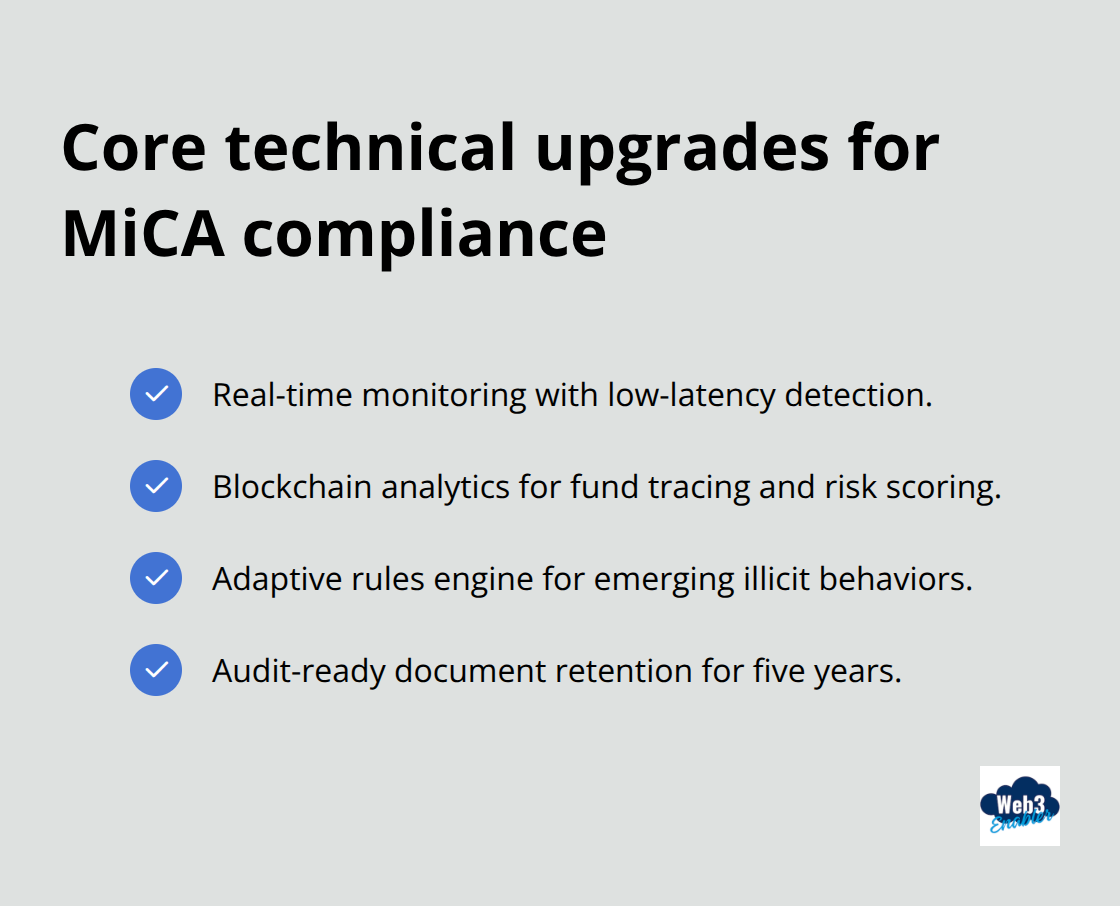
The customizable rules engine requirement means your current fraud detection probably won’t cut it – you need systems that adapt to evolving compliance scenarios and detect new illicit behaviors as they emerge. Documentation systems need audit-ready capabilities with five-year retention periods, and your current setup likely stores data in formats that auditors can’t easily review.
Resource Allocation Breaks Budgets Fast
Compliance teams require specialized MiCA training that costs between €10,000 to €25,000 per employee, and crypto firms anticipate hiring dedicated compliance officers during 2025. The automated Suspicious Transaction Report filing systems cost an additional €100,000 to €300,000 to implement properly, on top of the €50,000 to €200,000 in legal consultation fees. Operational resilience requirements under the Digital Operational Resilience Act add another layer of costs (with business continuity systems requiring separate budget allocation). Many crypto asset service providers may lose their registration status under MiCA’s grandfathering rules, which proves that half-measures in resource allocation lead to complete market exit.
Strategic Partnerships Become Essential
Smart businesses recognize that going it alone isn’t realistic anymore. The complexity of MiCA compliance demands specialized expertise that most companies don’t have in-house. Financial institutions increasingly partner with technology providers who understand both regulatory requirements and practical implementation challenges. These partnerships help distribute costs while ensuring compliance systems actually work when regulators come knocking. The question isn’t whether you need help – it’s whether you’ll find the right partners before your competitors do.
How MiCA Compliance Transforms Your Business Operations
MiCA compliance creates immediate market access advantages that separate winners from losers in the European crypto space. The 83% of institutional investors who now favor MiCA-compliant stablecoins represent a €450 billion market opportunity that grows 37% annually, but only for businesses that navigate the regulatory framework correctly. Financial institutions face operational overhauls that extend beyond simple compliance checkboxes – they need complete system integrations that connect blockchain payments with traditional banking infrastructure, real-time monitoring capabilities that track cross-border transactions, and audit-ready documentation systems that satisfy both crypto regulators and traditional financial oversight bodies.
Market Access Creates Your Competitive Advantage
The regulatory clarity attracts institutional capital like nothing else in crypto history. Over 50 firms received MiCA approval by mid-2025, including 14 stablecoin issuers and 39 crypto asset service providers, which proves that early compliance creates sustainable competitive advantages. Non-compliant competitors face automatic exclusion from EU markets, with predictions that 25% of unregistered stablecoins will disappear from European trading venues.
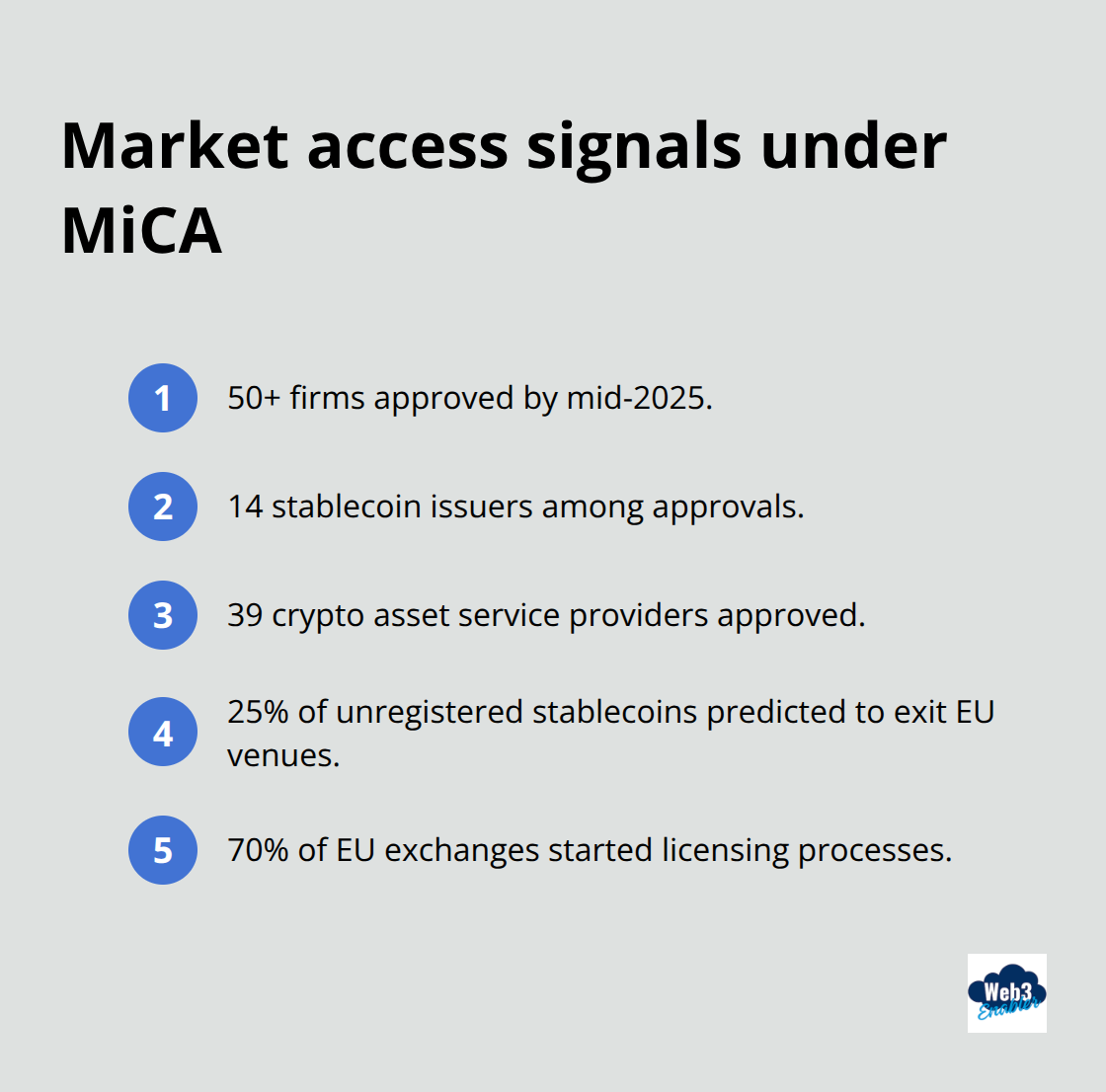
The 70% of EU exchanges that initiated licensing processes position themselves for long-term market dominance while their competitors scramble for expensive catch-up strategies.
Payment System Integration Demands Technical Excellence
Traditional payment rails require complete reconstruction to handle stablecoin transactions under MiCA requirements. Banks need blockchain analytics integration for fund tracing, automated suspicious transaction reporting systems, and real-time compliance monitoring that connects with existing anti-money laundering frameworks. The Digital Operational Resilience Act adds another complexity layer that demands business continuity systems capable of handling both traditional and crypto payment disruptions (which most legacy systems cannot handle). Financial institutions that successfully integrate these systems capture the growing demand for regulated crypto payment options while maintaining their traditional banking relationships.
Operational Changes Generate New Revenue Opportunities
Market abuse rules now govern crypto transactions, creating opportunities for compliant service providers to charge premium fees for regulatory-assured services. Quarterly audits with 95% coverage requirements become competitive advantages when marketed correctly to institutional clients who prioritize regulatory certainty over cost savings. The mandatory reserve management systems that cost hundreds of thousands to implement become barriers to entry that protect established players from new competitors who cannot afford compliance infrastructure (making early investment in compliance systems a strategic moat rather than just a regulatory burden).
Final Thoughts
MiCA stablecoins represent the most significant regulatory shift in European crypto history. The framework transforms digital currencies from experimental assets into regulated financial instruments with clear operational requirements. The 83% of institutional investors now favor compliant stablecoins, which proves that regulatory clarity drives adoption faster than any marketing campaign ever could.
Businesses face a stark choice: invest in compliance infrastructure now or exit the European market entirely. The €450 billion stablecoin market grows 37% annually, but only companies that navigate authorization requirements, reserve management rules, and consumer protection measures successfully can access this opportunity. Early compliance creates sustainable competitive advantages while late adopters face expensive catch-up strategies that often prove too costly to implement.
The regulatory evolution continues beyond MiCA as the European Central Bank advances digital euro integration and the Digital Operational Resilience Act adds operational requirements that reshape how crypto businesses operate. Smart companies recognize that compliance positions them for long-term market leadership rather than just rule adherence. We at Web3 Enabler help businesses bridge traditional corporate infrastructure with blockchain technology through 100% Salesforce Native solutions that support payments, compliance, and automation (the regulatory landscape rewards businesses that integrate blockchain capabilities with existing systems rather than separate crypto operations).