



Business leaders worldwide are recognizing the importance of blockchain technology in business operations. Traditional payment systems cost companies billions in processing fees and delays annually.
We at Web3 Enabler see firsthand how blockchain transforms everything from vendor payments to client relationships. Smart implementation cuts costs while boosting security and transparency across operations.
How Does Blockchain Actually Change Business Operations
Blockchain technology eliminates the middlemen that drain business resources. Traditional payment systems charge businesses between 4-6% per transaction, while blockchain-based solutions like NOWPayments operate at just 0.5%. This dramatic reduction in processing fees translates to immediate cost savings for companies that handle substantial transaction volumes. The technology processes payments in minutes rather than the days that conventional banking systems require, which accelerates cash flow and strengthens vendor relationships.
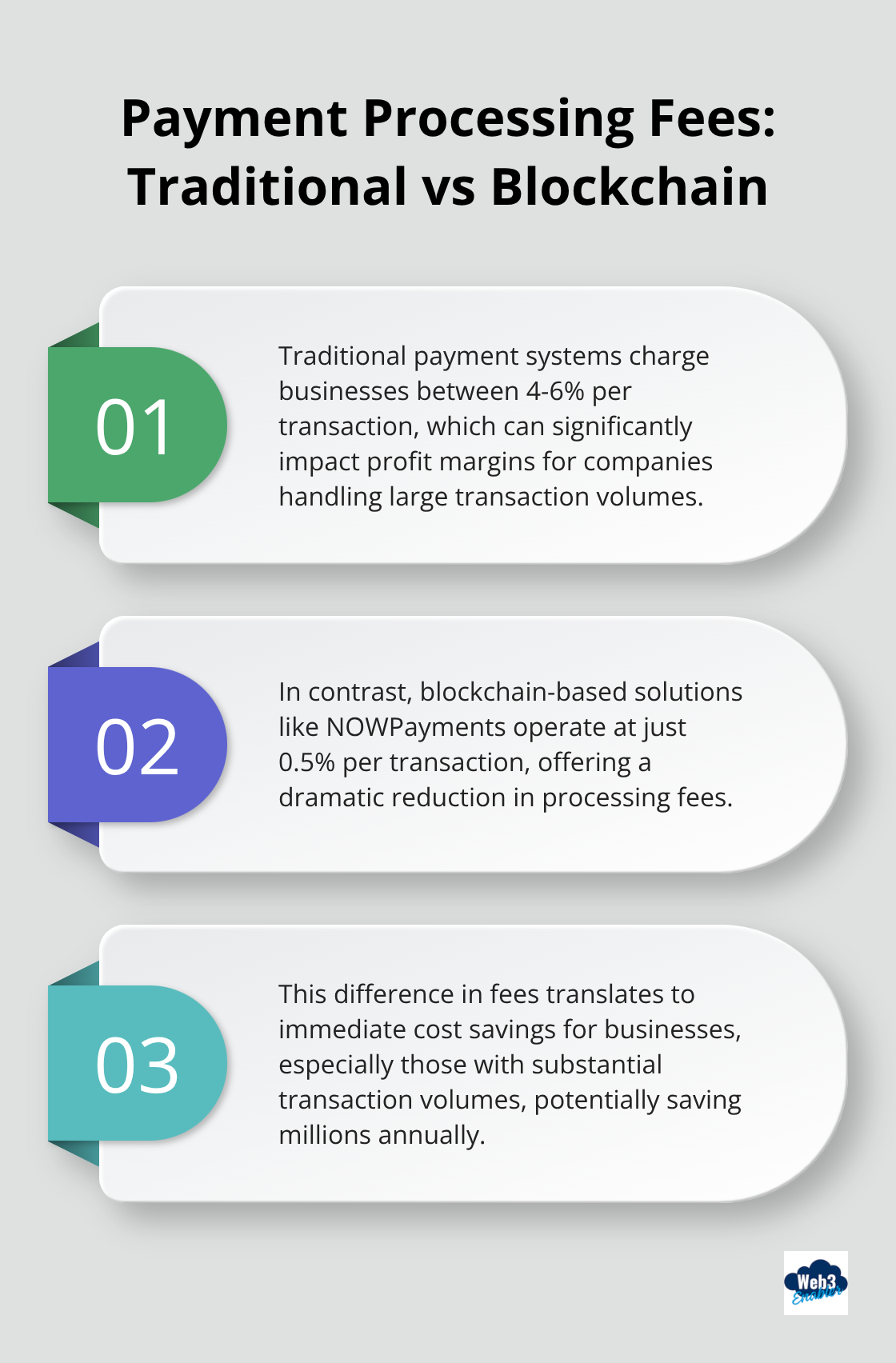
Payment Processing Revolution
Cross-border blockchain payments cost between 0.1% and 2%, compared to traditional wire transfers that often exceed 5% in total fees. Next-gen blockchain platforms are ready to offer 24/7 real-time settlement of cross-border transactions. Companies no longer wait 3-5 business days for international transfers to clear. The Avalanche blockchain processes transactions in under a second, which makes real-time business operations feasible. Nine out of ten firms now investigate blockchain payments according to recent industry surveys (recognizing these operational advantages).
Security Through Decentralization
Traditional financial institutions face average data breach costs that exceed $6 million per incident according to IBM’s 2024 Cost of a Data Breach Report. Blockchain eliminates these centralized data honeypots through distribution of transaction records across multiple nodes. Each transaction creates an immutable record that cannot be altered retroactively. This architecture removes single points of failure that hackers typically target in conventional systems. The technology provides complete audit trails automatically, which contrasts sharply with opaque traditional payment systems that lack transparency.
Compliance Automation Benefits
Blockchain creates permanent, tamper-proof records that auditors can verify instantly. Walmart Canada reduced freight invoice disputes from 70% to 1% through blockchain automation for payment reconciliations. The technology eliminates manual record-keeping errors that plague traditional accounting systems. Real-time fraud detection becomes possible through blockchain’s transparent transaction history (capabilities that legacy systems struggle to achieve efficiently).
These operational improvements set the foundation for broader business transformation across multiple departments and functions.
Which Business Areas See the Biggest Blockchain Impact
Financial operations experience the most dramatic transformation through blockchain implementation. Companies that process high transaction volumes save millions annually when they switch from traditional payment rails to blockchain systems. JPMorgan’s Onyx blockchain platform enables instant cross-border payments and eliminates correspondent banking delays that previously took 3-5 business days. The Cleveland Cavaliers built their Cavs Rewards program on Avalanche blockchain and created transparent fan loyalty tracking that traditional databases couldn’t match. Stablecoin activity reached roughly $27.6 trillion in 2024, making up over 80% of total stablecoin usage, indicating massive adoption in business payment systems.

Supply Chain Operations Get Real-Time Visibility
Walmart tracks food products from farm to shelf through IBM’s Food Trust blockchain and reduces recall times from days to seconds. This capability saves millions in potential liability costs while it protects brand reputation. The California DMV digitized 42 million car titles on Avalanche and streamlined ownership transfers that previously required weeks of paperwork. Companies achieve single-source-of-truth data management across complex supply networks and eliminate disputes that arise from conflicting records between partners. Supply chain management applications drive 42% of enterprise adoption across various sectors.
Customer Management Systems Gain Trust Features
Blockchain integration transforms customer relationship management through verifiable transaction histories and automated compliance reports. Deloitte integrated Avalanche blockchain into disaster recovery platforms and demonstrated how blockchain enhances existing business systems rather than replaces them. The technology creates permanent audit trails that customers can verify independently and builds trust that traditional systems cannot provide. Real-time fraud detection capabilities protect both businesses and customers from financial crimes that cost the global economy billions annually (making security a competitive advantage).
These transformative changes across financial operations, supply chains, and customer management create measurable business benefits that extend far beyond simple cost reduction. Organizations looking to implement blockchain in their business can streamline operations and enhance security across these critical areas.
What Specific Benefits Drive Business Blockchain Adoption
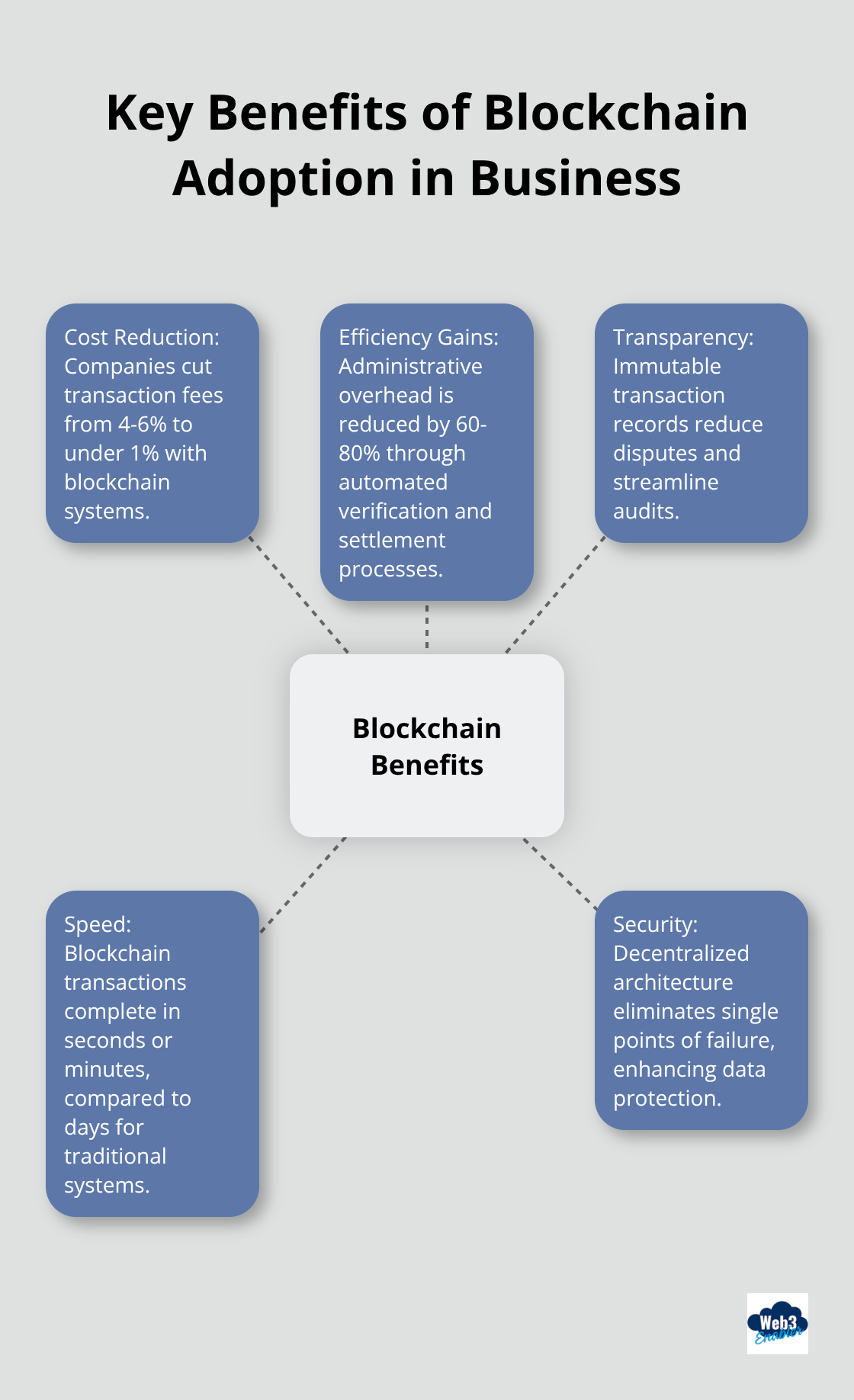
Companies that implement blockchain solutions experience immediate operational improvements that translate directly to bottom-line results. The Open Network blockchain processes up to 105,000 transactions per second compared to Visa’s theoretical limit of 65,000 TPS, which means businesses can handle peak transaction volumes without system slowdowns. McKinsey predicts stablecoin usage will reach $2 trillion by 2028, up from $250 billion today, driven by companies that save 2-4% on every international payment compared to traditional wire transfers. Deloitte surveys show 40% of large corporations plan to accept crypto payments within two years because costs drop from the typical 4-6% to under 1% with blockchain systems.
Speed Transforms Vendor Relationships
Traditional international payments take 3-5 business days to settle while blockchain transactions complete in seconds or minutes (depending on network congestion). This speed difference changes how businesses manage cash flow and vendor relationships fundamentally. Companies can pay suppliers immediately upon delivery verification rather than wait for banks to process transfers across multiple correspondent banks. The California DMV reduced title transfer times from weeks to minutes after it digitized 42 million car titles on blockchain, which demonstrates how government agencies achieve similar efficiency gains. Administrative staff spend 70% less time on payment reconciliation when blockchain automates transaction verification and record-keeping processes.
Transparency Reduces Business Friction
Blockchain creates immutable transaction records that all parties can verify independently without requests for documentation from counterparties. This transparency eliminates disputes that typically consume weeks of administrative time and legal resources. Walmart Canada’s freight invoice disputes dropped from 70% to 1% after the company implemented blockchain payment reconciliation (which saved millions in operational costs annually). The technology provides complete audit trails automatically, which means companies can respond to regulatory inquiries within hours rather than weeks spent on paper documentation from multiple departments and external partners.
Cost Reduction Drives Adoption
Blockchain eliminates intermediaries that charge substantial fees for payment processing and verification services. Traditional cross-border payments cost businesses between 4-6% in total fees while blockchain alternatives operate at 0.1-2% for the same transactions. Companies that process high transaction volumes save millions annually when they switch from traditional payment rails to blockchain systems. The technology reduces administrative overhead by 60-80% through automated verification and settlement processes that replace manual reconciliation workflows.
Final Thoughts
The importance of blockchain technology in business becomes clear when companies examine their operational costs and efficiency metrics. Organizations that implement blockchain solutions report 60-80% reductions in administrative overhead while they cut transaction fees from 4-6% to under 1%. These improvements compound across financial operations, supply chain management, and customer relationships to create competitive advantages that traditional systems cannot match.
Business leaders who delay blockchain adoption risk falling behind competitors that already benefit from faster payments, automated compliance, and transparent audit trails. The technology has moved beyond experimental phases into proven implementations that deliver measurable results. Companies like Walmart Canada and the California DMV demonstrate how blockchain transforms operations across industries and government sectors.
Forward-thinking organizations should start with payment processing improvements that offer immediate cost savings and efficiency gains. Web3 Enabler provides native blockchain solutions within the Salesforce ecosystem (trusted by industry leaders like Circle, Ripple, and Cardano). The platform enables businesses to accept stablecoin payments, send global payments faster, and automate compliance processes without disruption to existing workflows.